Route map

Botswana – to Gaborone
We set from Victoria Falls after lunch and drive the seventy miles to the Botswana border arriving there by mid-afternoon. We and the bikes are hosed down with disinfectant to prevent the spread of foot and mouth in this cattle-dominated country.

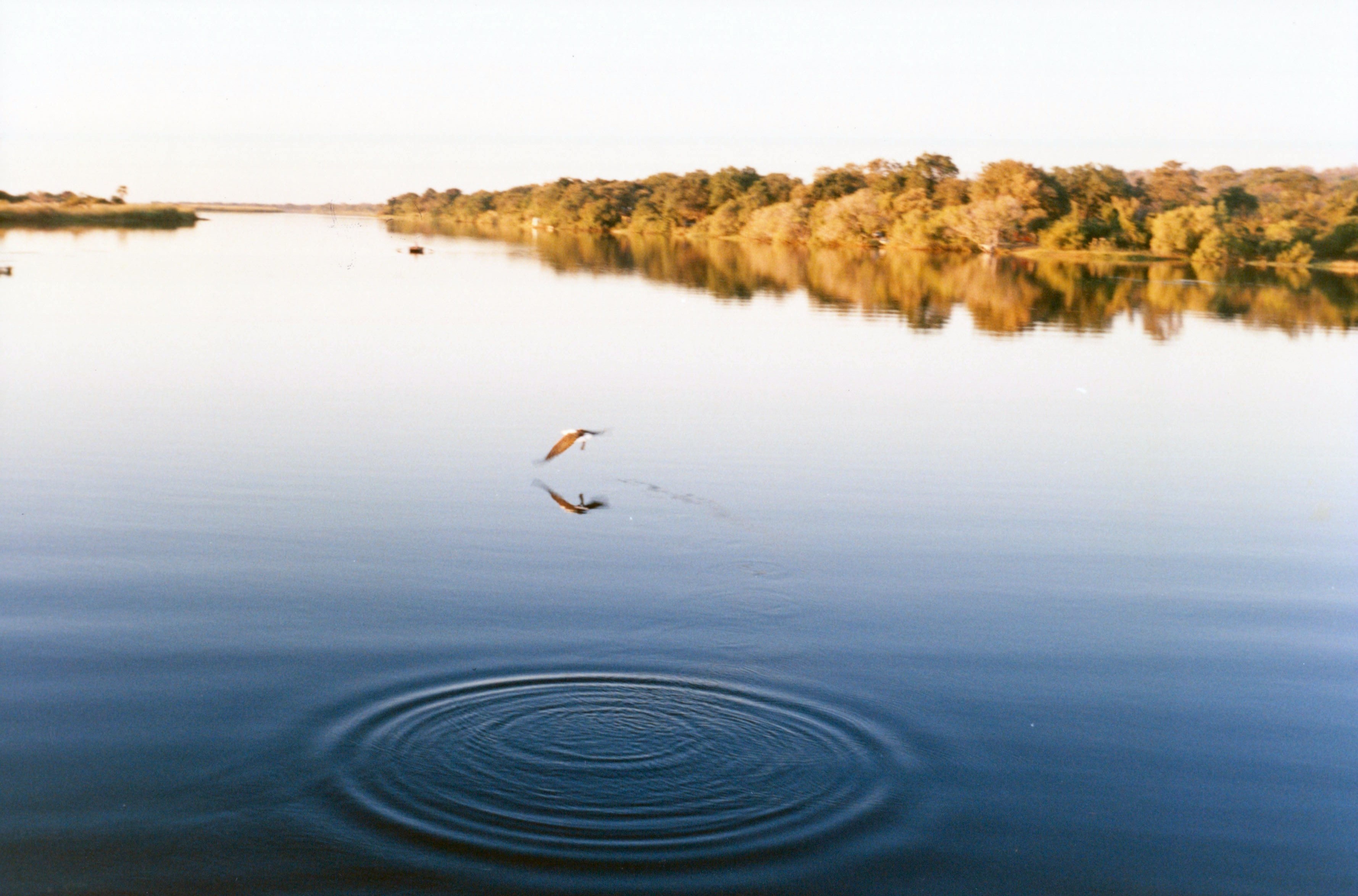

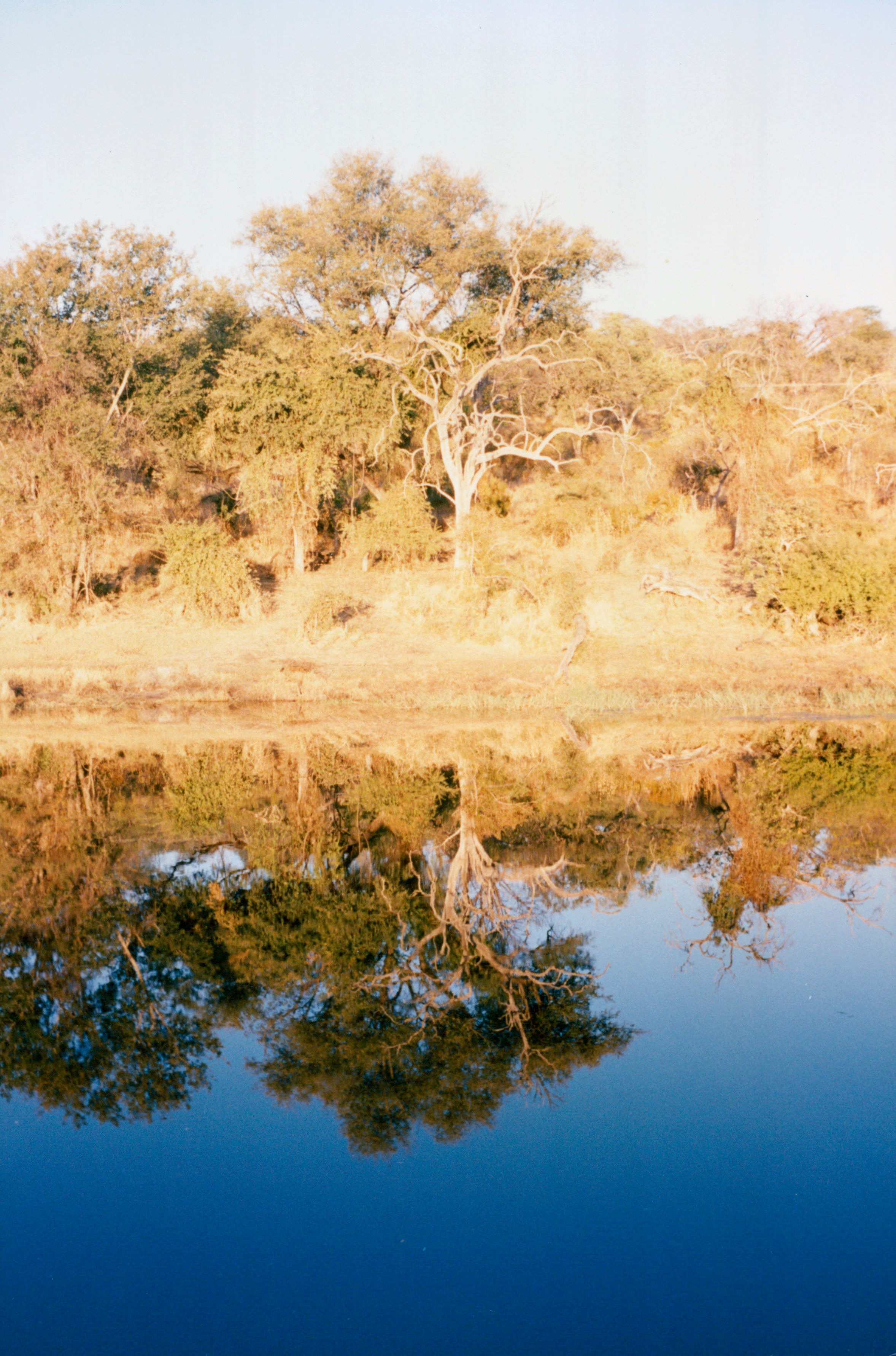
After Zimbabwe, Botswana seems less organised with ramshackle buildings, unkempt verges and broken-down filling stations replacing pristine order. By late afternoon when we set off south from Kasane we are wearing all we’ve got. The road is flat and perfect. We learn that construction has finished only recently and is set to open up Botswana north of Nata and Francistown. We bowl along at 55mph. Even just after dark in early June it is cold and by 8pm we have to stop for large amounts of coffee to warm up. Later on, Leigh sees a leopard by the road. We stop at 10pm as cold as either of us have ever been on a bike. Somehow Leigh finds the energy to make some soup and we manage to warm up about 1%. We camp at the side of the road afraid to wander any distance into the bush. I am unable to sleep as it is so cold. Our thermometer says that it is 5 C but we have held it in deep mistrust ever since it said that it was 20 C at midday in the Sahara. The ice on our sleeping bags makes us even more suspicious. Next day in Francistown we are told that it was about 5 degrees below. We pass through Nata by 8am but still have over 380 miles to go to Gaborone. Please, please let us get there before it gets dark.
We approach Francistown and are stopped at a roadblock. All our bags are searched and we have a real job staying civil. We had not imagined that Botswana would be like this. We bolster our flagging strength with a large portion of chicken and chips and in the fashion of true troubadours climb aboard our trusty steeds for the last 437kms which we reckon that we can just about do before dark. As we leave Francistown there is another roadblock. Contrary to everything that we have learned in the last 10,000 miles I lose my temper and argue with the soldiers that there is no need for our bags to be searched again. We are told that we will have to wait until 3pm before we can leave. We argue some more and are then told 6pm. We tell them that they can keep us there as long as they want but we won’t cooperate with them and are told 3 days. I finally shut up and we have a cup of tea.
The impasse continues until the shift changes. Leigh decides that it is better if he talks to the officer in charge of this shift and 10 minutes later, we are packed up and on our way. We both know that we will freeze because I wouldn’t shut up. There are still another 75 miles to go when it gets dark and we do freeze. The final indignity is a full search at the road block outside Gaborone. Leigh goes first and I am not to be allowed to say a word. We are not in the least elated when we finally arrive in the city but our moods undergo their usual pendulum swing when we manage to find Leigh’s friend Catherine’s house and we are fed an enormous meal as we stumble through the door.
Travelling around Botswana
By the time we leave for the journey north to Nairobi we have spent over a month in Gaborone and Botswana. Our first week is used up generally recovering from the last three months, eating vast quantities of food and going to the movies in Gaborone.

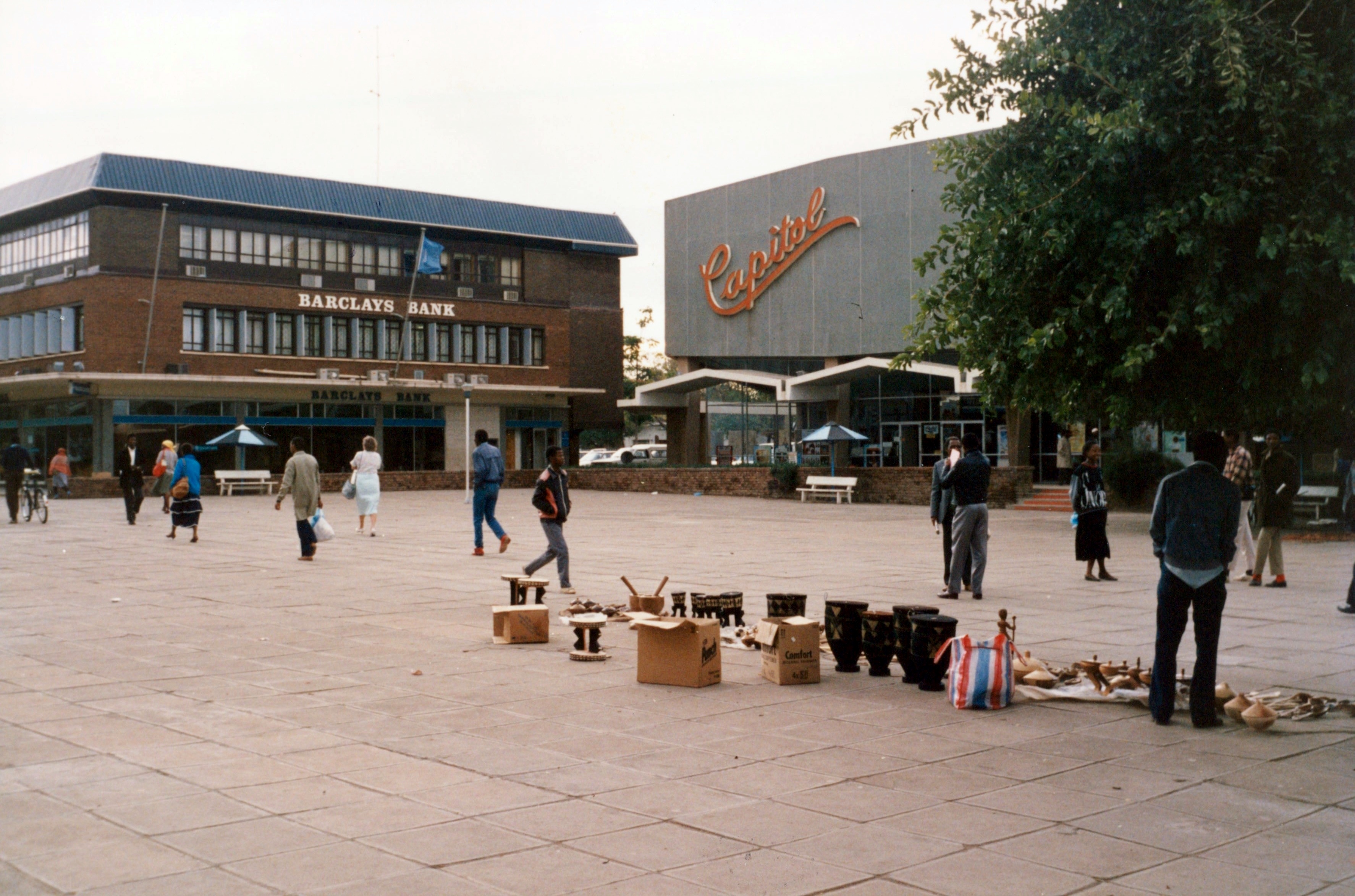
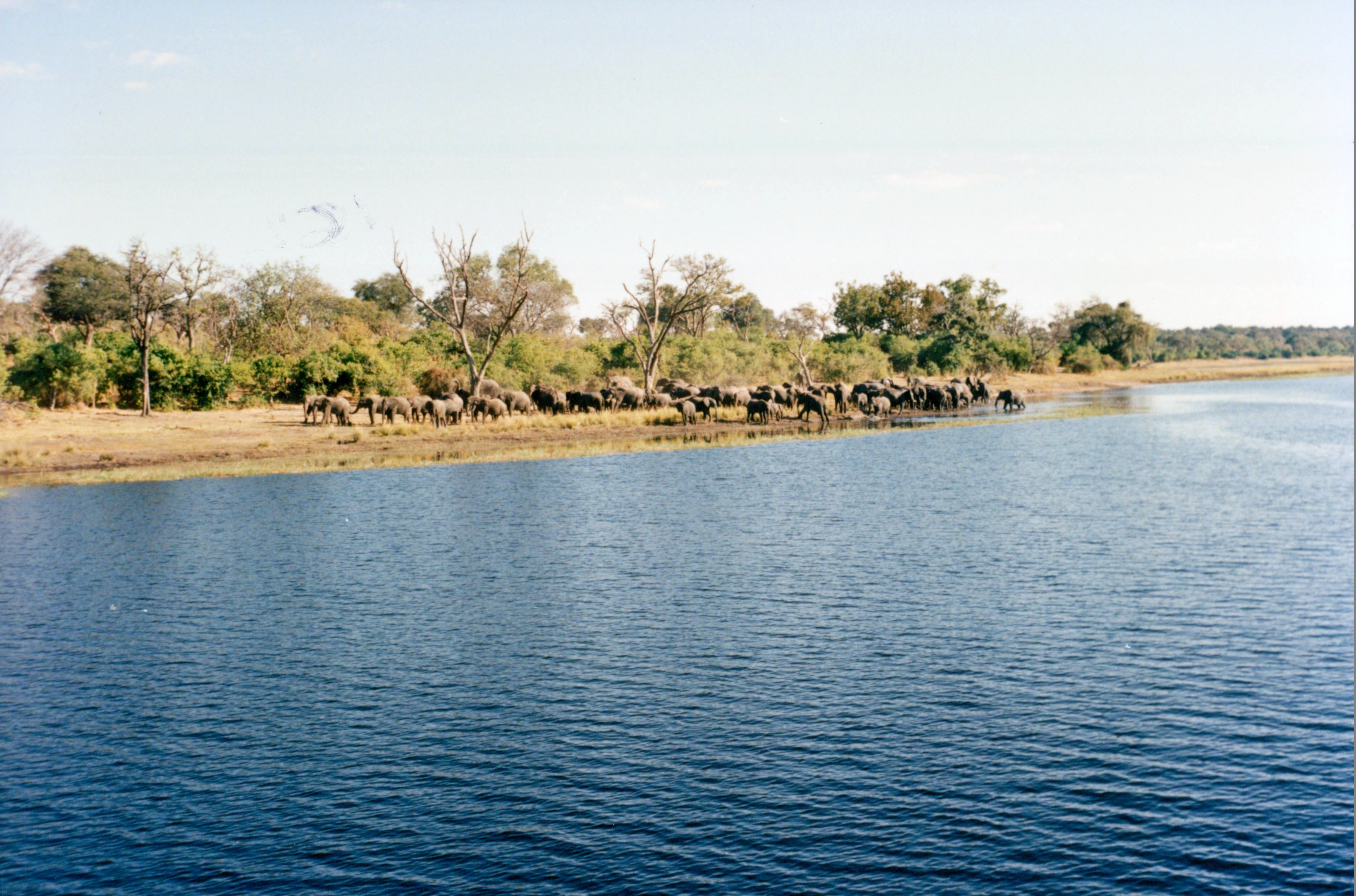
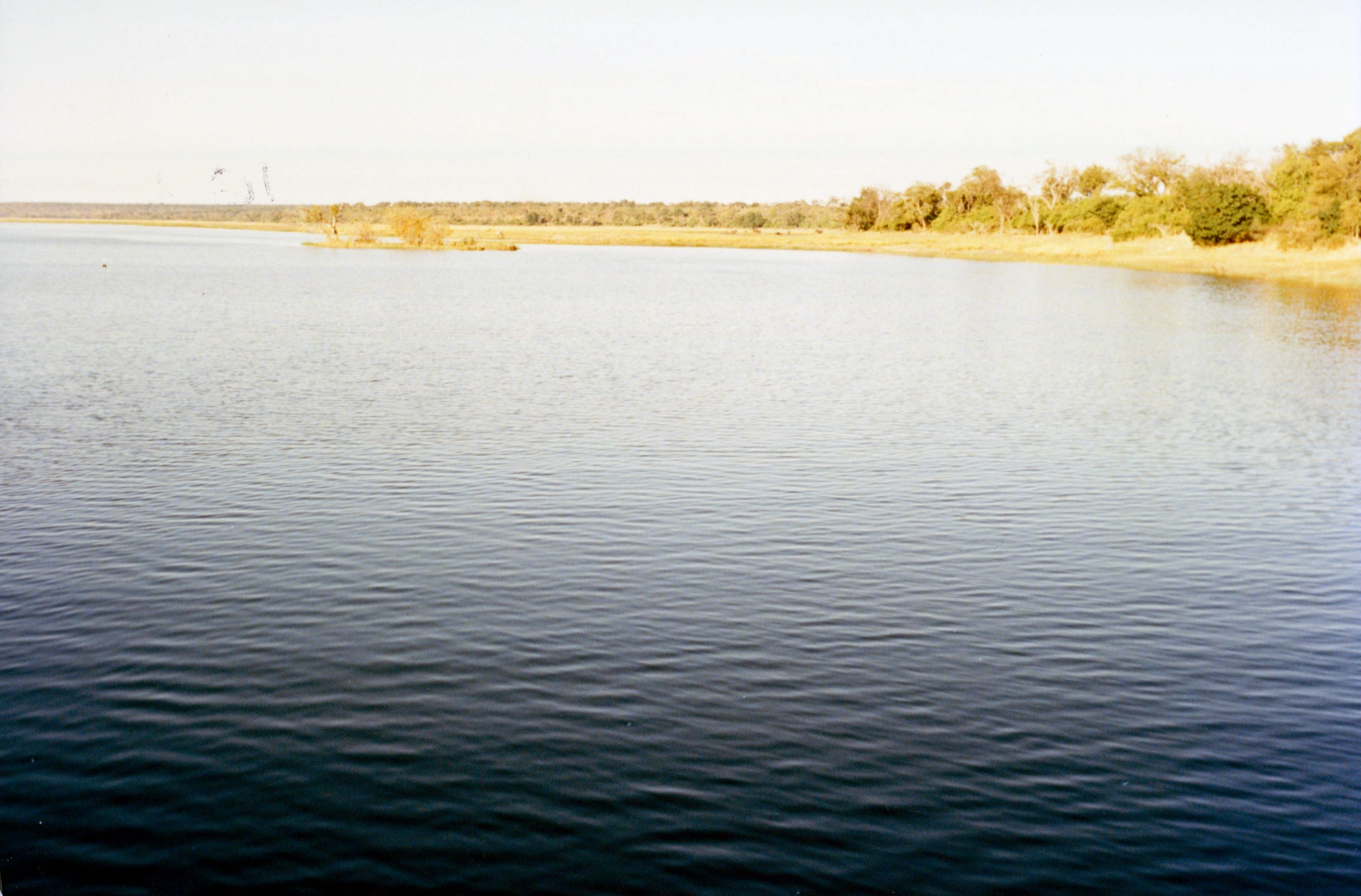
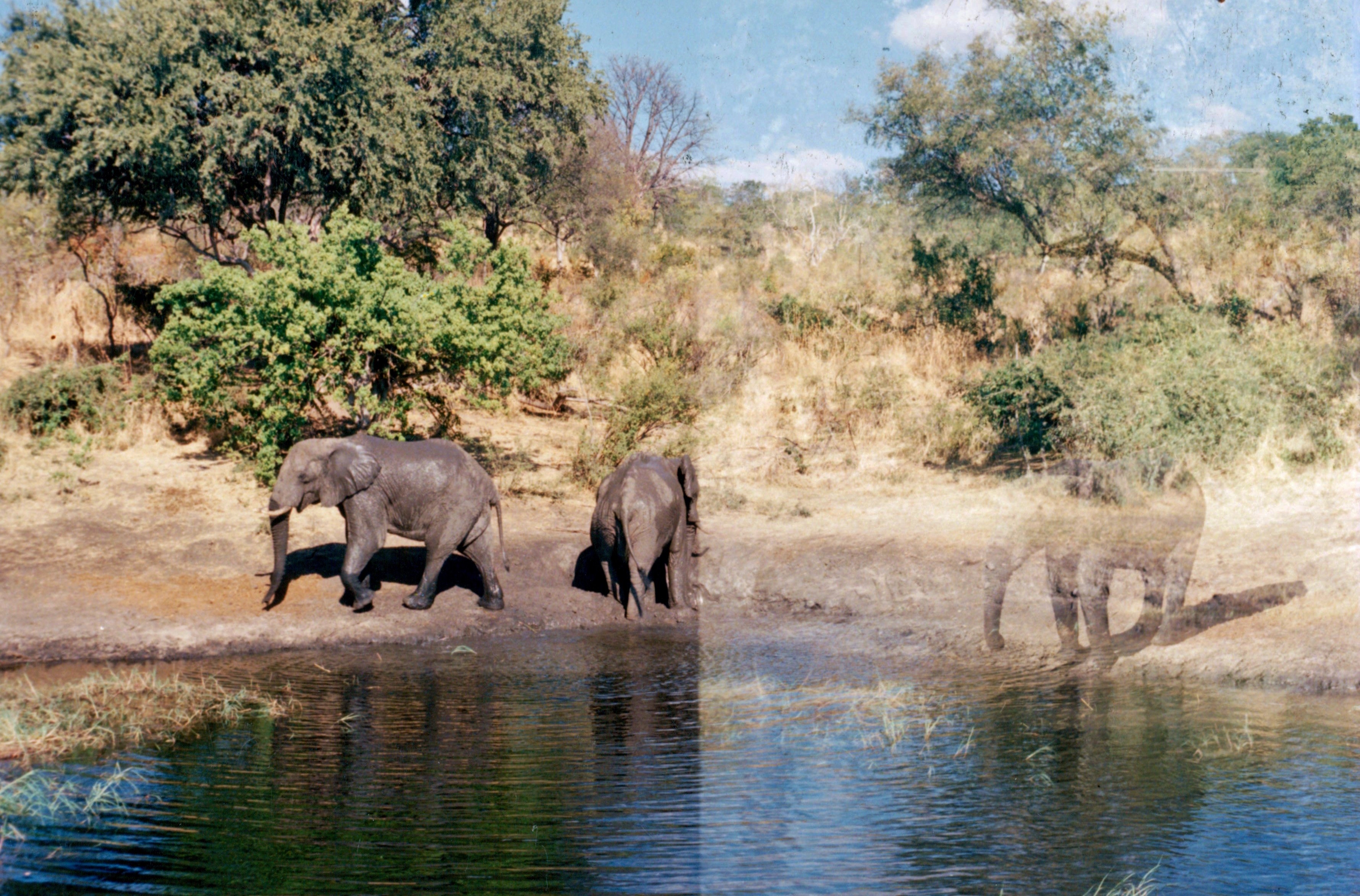
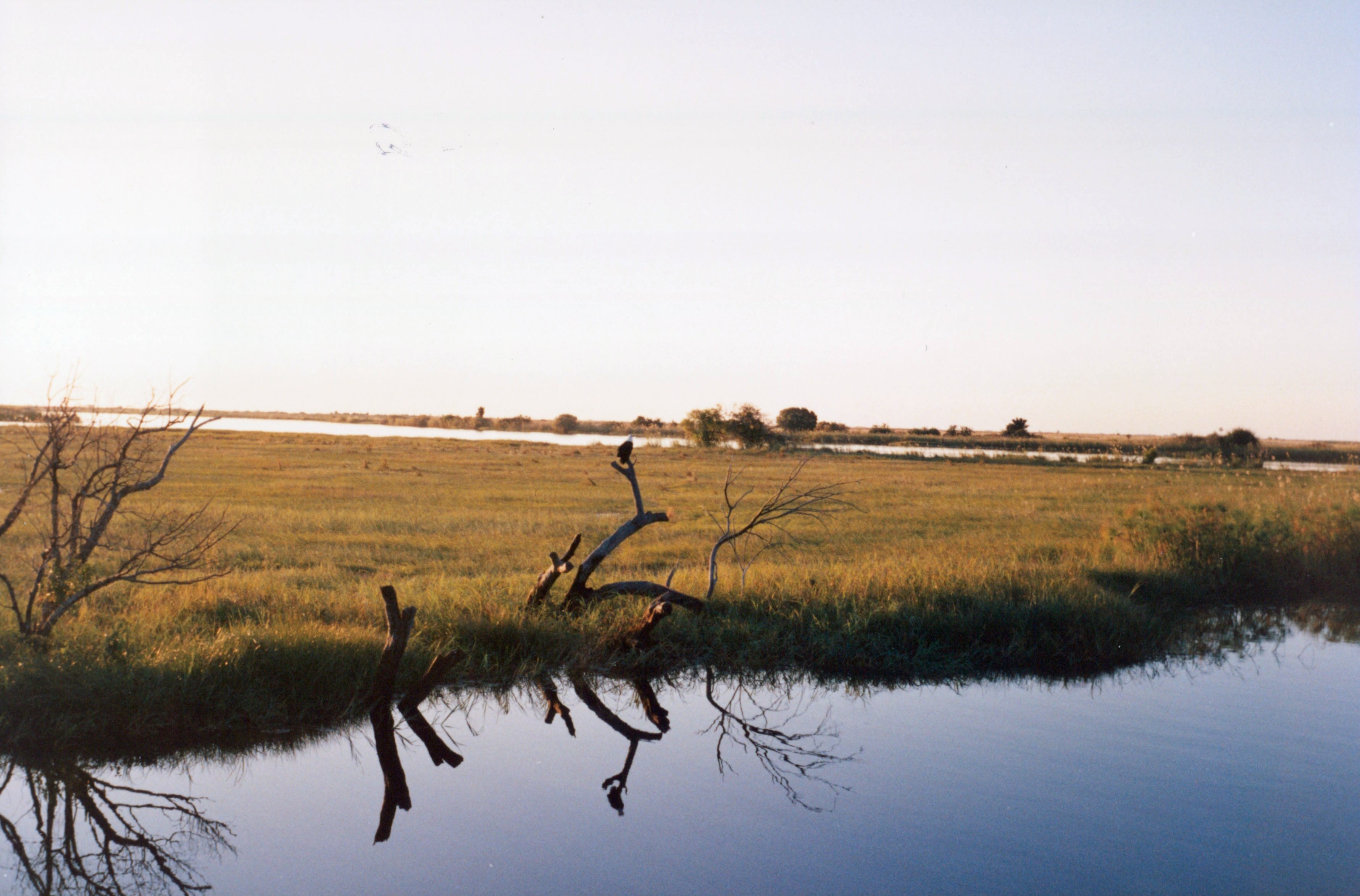
The second week, the two of us hitchhike up to the Chobe Game Park back up near Kasane in the far north and we manage to see hippo, elephant crocodile and a fish eagle. We fail, however, to hitch over to Maun and the Okavango Delta and Leigh goes there the next week on the plane. While he is there, he falls ill with malaria which was probably contracted when we passed through the chloroquin resistant parts of Southern Tanzania. He is rushed out of Oddballs camp in the Okavango by plane and then spends four days in Maun hospital and another week in Gaborone getting some strength back.
While Leigh has been away, I make a number of day trips – one of which is to Molepolole, a village thirty miles to the west with a large aloe cactus forest. I also ride down to Lobatse, the principal town in colonial times. Lobatse is now home to the Botswana Courts of Justice and Ecco beef, a fabled brand of corned beef and pet food. Another day I go to Mochudi with its museum and Kglota, residence of the tribal chief, and to Oodi where they weave large ornate tapestries depicting traditional scenes from village life.
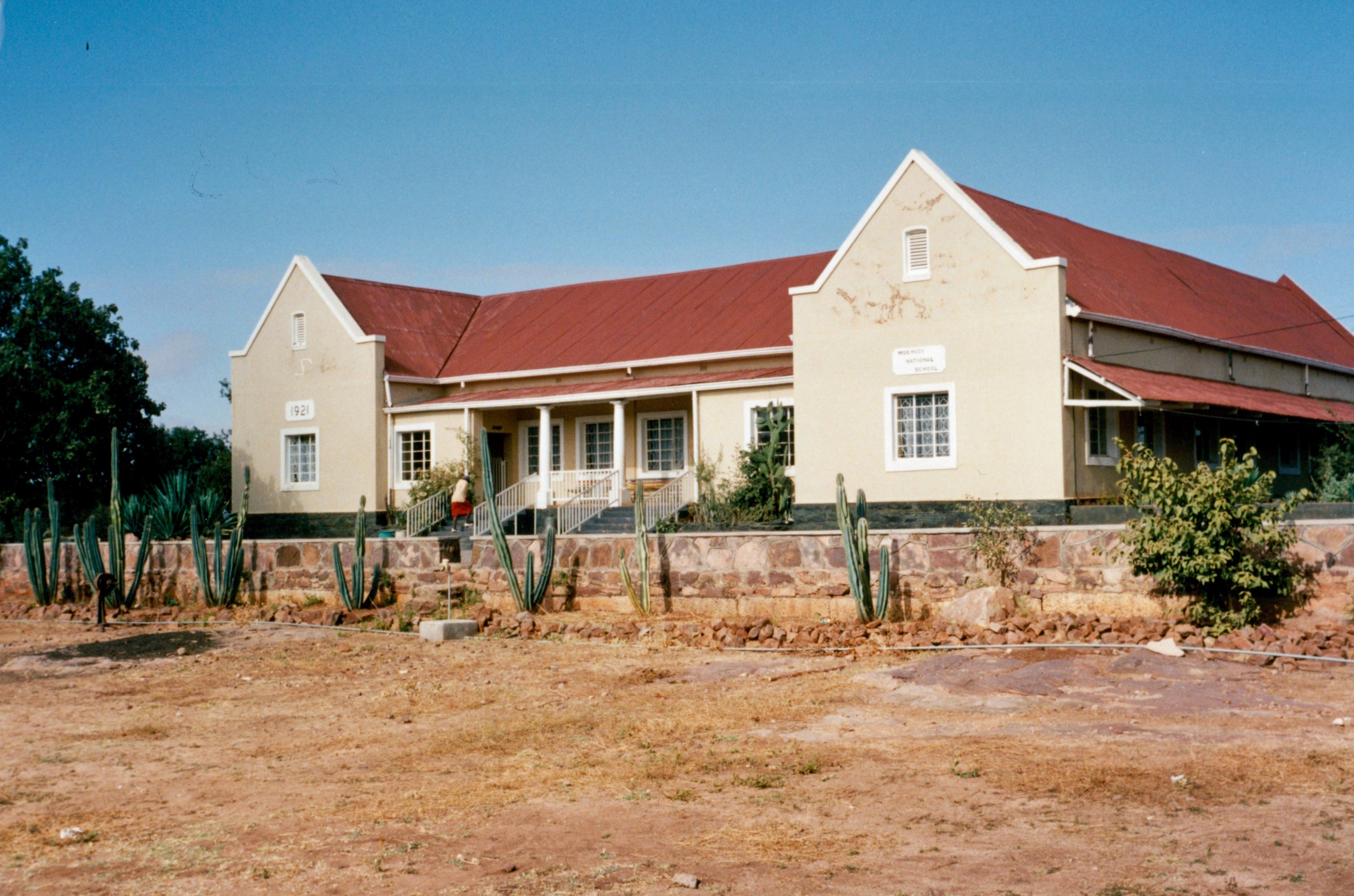
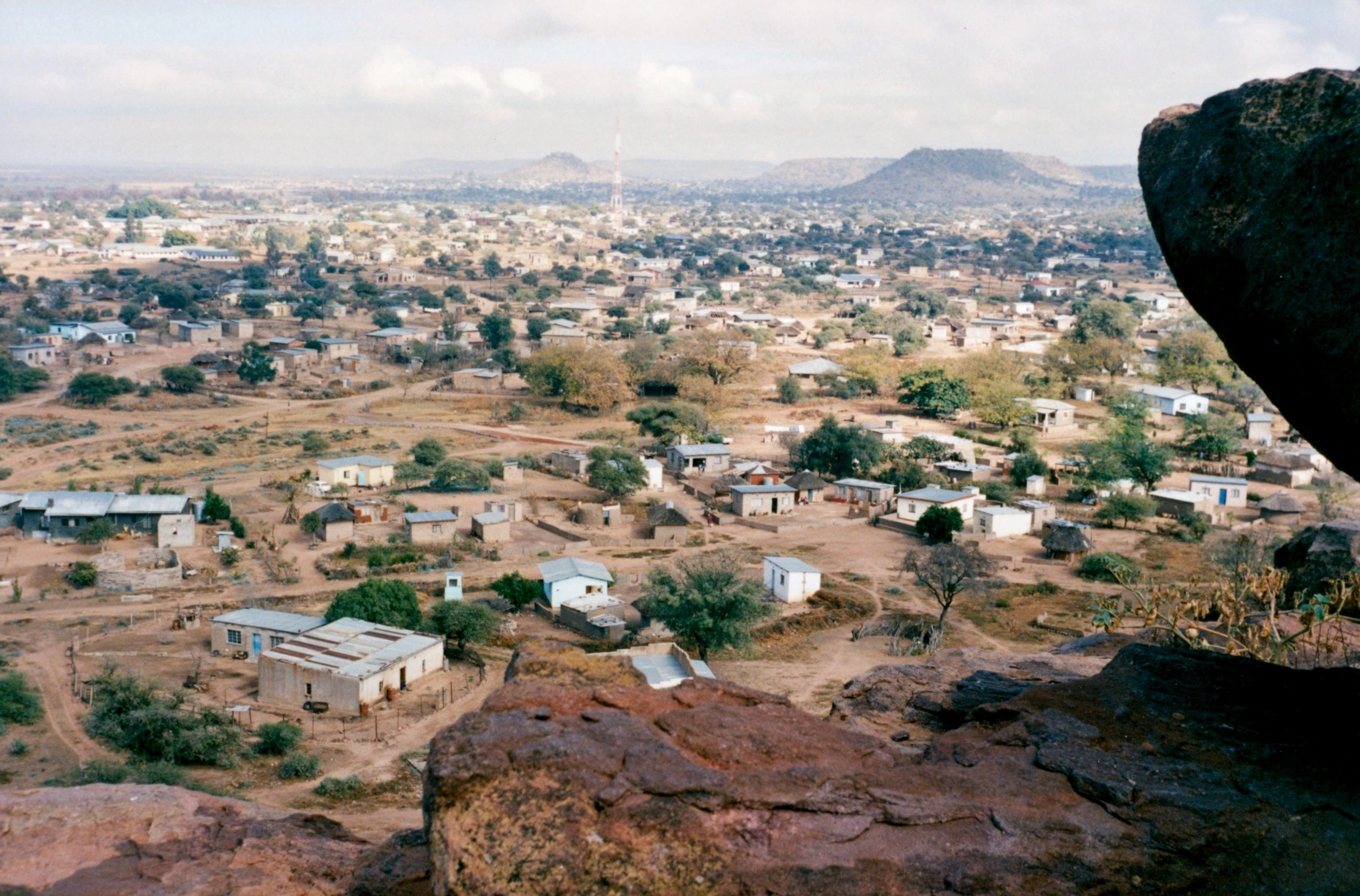
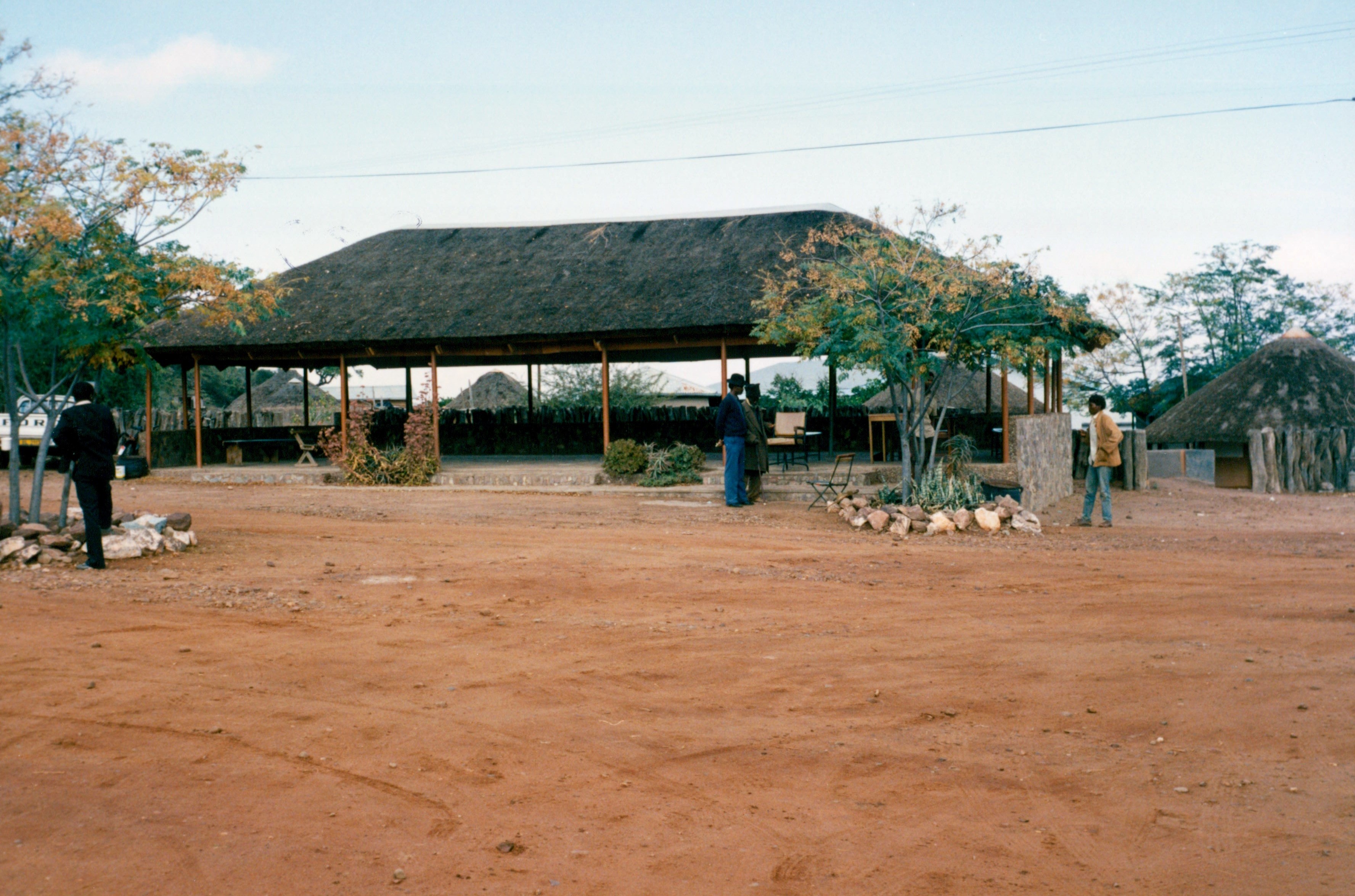
Towards the end of our stay, I am lucky to catch a plane ride out to Ghanzi, a small sun-baked town a hundred miles south – west of Maun and four hundred miles north-west of Gaborone. This is very much a frontier town in the Kalahari with Namibia next stop west. There are four stores in town, a brightly fronted Barclays Bank and the Kalahari Arms Hotel. It is very hot here by day even in winter and wandering around the empty town I meet two Italians trying to hitch out west. Here you book your lifts. They’re due to meet a guy from the hardware store later that afternoon to fix a lift with a truck leaving the next morning before dawn. Lots of the women in Ghanzi are Herero and wear the bright caps and billowing dresses introduced by the missionaries of the Dutch Reform Church at the turn of the 20th century. We fly back to Gaborone over the Kalahari and the Khutse Game Reserve. There are cattle ranches dotted throughout the desert and numerous tracks lead to water holes surrounded by the rondavels of tiny villages. The rest that we have had from travelling is much needed and we set off eager to get back biking again. At the beginning of July, we are ready to go and head back to Francistown for the last time.
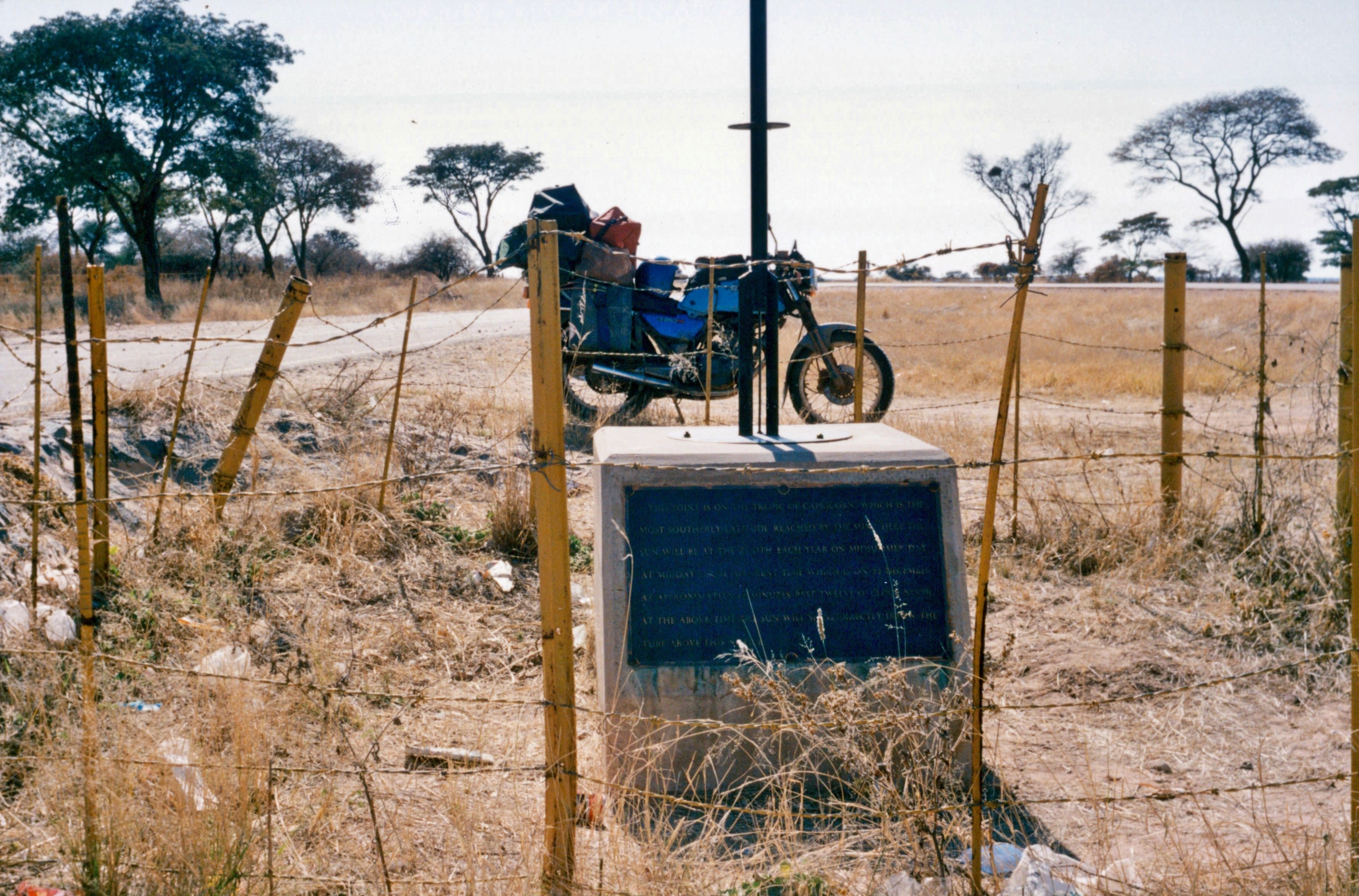
On this journey I manage to lose a bag off the back of the bike containing the medical kit, the water filter, my diary and address book and, most importantly, the motorcycle’s carnet de passage without which we are reliably informed that we have no chance of getting the bike as far as Kenya.
 Africa Overland 1988