Route map
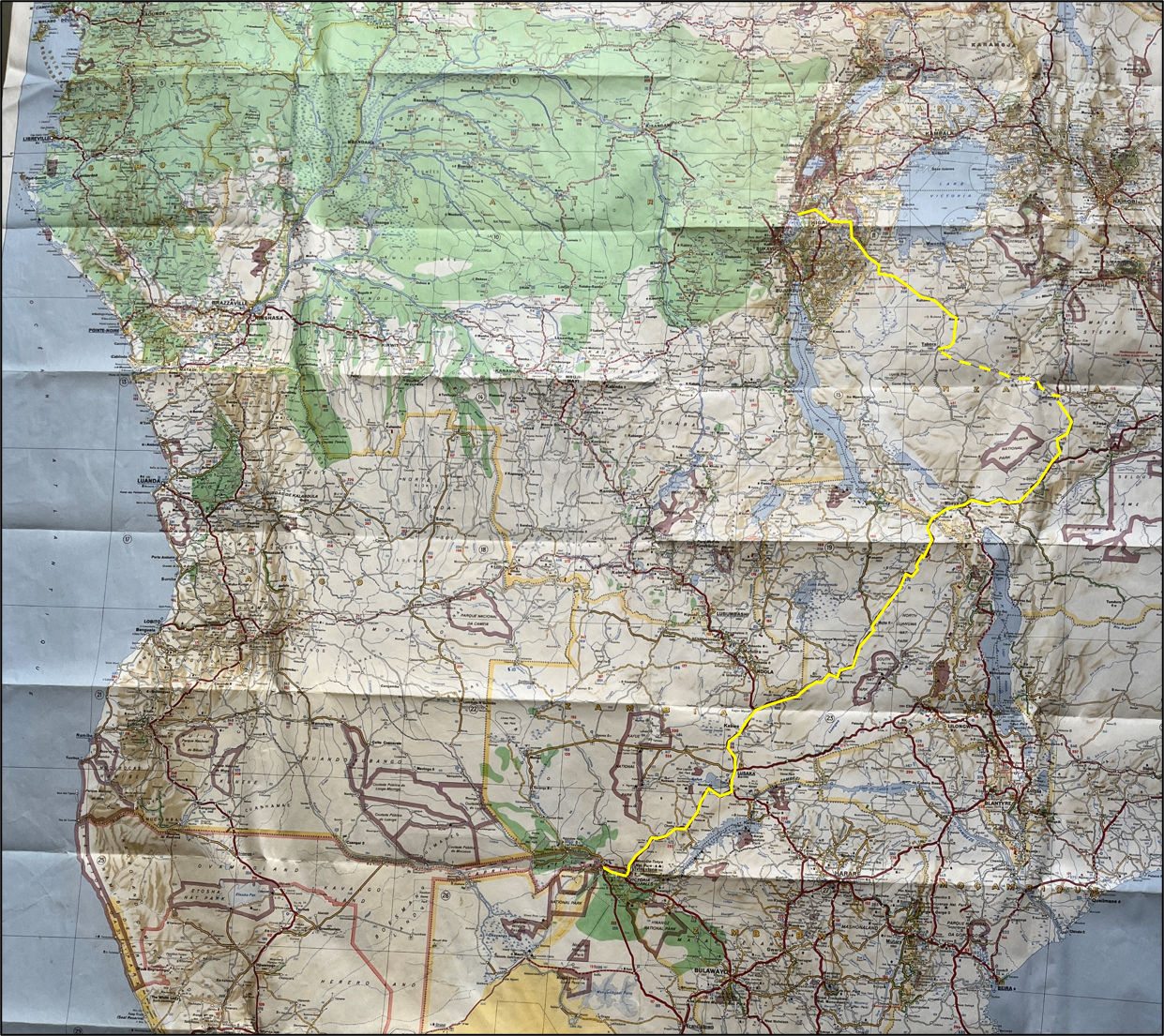
Northern Tanzania
Next morning we clear the border very quickly and we head down more asphalt. We are pleased to be in East Africa and it is picture book stuff with savannah hills rolling away to the distant plains. We see very few people and pass only the occasional village. Later we omit to turn south west when we should have and carry on for a hundred miles south east on a new stretch of asphalt that we could ride on for ever. It is by now very hot and we are both angry for this mistake. We have to carry on as we do not have enough petrol to turn back. We have no money as yet and are bound to miss the bank. We have a big row as to whether there is time to eat some cheese if we want to get to the bank in Kehama. Ten miles further on our calculations go to the wind as the asphalt ends and the dirt road is awful. We stop and laugh at our stupidity and even more stupid row.
We continue very slowly. Leigh’s exhaust baffle has split and the header pipe keeps falling off. We stop to fix it and are attacked by a swarm of tse-tse fly. We stagger on to the town where our charms fail to work on a shut bank. We have $10 in cash undeclared and change it for 1,500 shillings with a Danish aid worker and with this we buy food, fruit and petrol. That night we camp in the bush and awake to the finest sunrise.
We can feel Africa penetrating our whole beings early in the mornings and before dark when the shadows are left stark and colours rich and deep beyond our experience. These are wonderful moments to be on the bikes.
We putter into N’zega and spend more of our illegal money on sambusa, chapati and chiy. We meet a peace corps worker who is involved with an agricultural education project in the area. She, too, is headed down to Tabora and is looking after the mission there for the mission head who is back in the States on holiday. She says that we are welcome to stay there if we wish. She comes with us to the bank where it takes 2 hours to change $100. We are pleased to have met her but are sure that we will be well south of Tabora by nightfall. The seventy miles to Tabora ends up taking us 5 hours. The piste is the worst possible for our little road bikes with its continual corrugations. As we have little travel in our suspension, we are forced to grind along at 15mph being shaken to pieces the whole way. We stop regularly for water. The surrounding countryside is thick savannah and sparsely populated. It is hard to see beyond the road side as the grasses are over six feet tall and the land around is uniformly flat. There are very few vehicles apart from the occasional overloaded Land-Rover being driven at a breakneck speed.
We agree that another 350 miles of this will kill us both and we go to the railway station at Tabora to find out if we can put the bikes on the train as far as Dodoma which lies on the main track just 150 miles north of the asphalt road that runs from Dar Es Salaam to Lusaka. This appears to be an unusual request but we are told that if we turn up at 6am next morning we can put them on the 7am train bound for the coast. We head into town and do an oil change at an AGIP garage run by an Asian family. One of them is down from Mombasa and most of them have come to Tanzania from Uganda or Kenya.
By now it is nearly dark and we ask for directions to the U.S. mission. This we find out of town surrounded by a high fence and guarded by dogs and three armed men. We wonder what the local prison is like. Thankfully Beth is there and makes us a large meal of soup and meat washed down with gallons of coffee. We drag out the last of our cheese in a pathetic attempt to reciprocate. Beth explains that for some reason Tabora is a very violent town with a high crime rate – hence the security. She tells us that she is coming to the end of a three-year stint in Tanzania. For two years she lived in a village teaching new agricultural methods in the region as well as working on reducing the incidence of pesticides poisoning the farmers who are using them. More recently she had helped put on a play which attempted to put over these ideas to the commune leaders in a dramatic way and which proved so popular that the whole thing ended in a near riot. She still has one more project that she wishes to carry out before she leaves. Had she not she might well have loaded up her XL125 and come along with us. We stay the night in the mission guest house and somehow get up at 5am next morning.
Dodoma by train
We head down to the station and have the bikes loaded by 6.30am. The train finally departs at 3pm that afternoon. The journey itself is comfortable and enjoyable. At least in second class we are guaranteed a seat. We chat to some of the passengers who tell the guard who is drunk and keeps shouting at us to leave the carriage. I wander up to the buffet car for a non-existent Fanta and talk to a lecturer who comes from Mwanza on the southern shores of Lake Victoria. He and his family have taken their annual holiday there and are heading back to Dar Es Salaam where he teaches computing. He explains about the new political directions being taken since President Nyrerere began to take a less prominent role in the government. There have been attempts to purge corruption in the civil service and individual capitalism is being promoted. The communal farms are now allowed to some produce to be sold privately by its members. Throughout Tanzania people feel that standards are beginning to rise for the first time since the country’s disastrous intervention in Uganda had crippled them in the mid-1970s.
Tanzania – the Southern Highlands
We arrive in Dodoma at 3am, unload the bikes and head out into the dark for some 10 miles. To devolve power from the coast the government has decreed Dodoma as the new capital. No one, however, wants to go there as Dar is clearly the commercial and political heart of the nation. So far there is only one asphalt road leading to the capital. Needless to say, we are not on it and the day is spent dragging down to Iringa where the heaven of the asphalt begins. By mid-afternoon we are climbing into Tanzania’s Southern Highlands with vast views of the tree covered plains below. This area is the loveliest that we have passed through for some time and the bare and craggy hills remind us of the Scottish Highlands and the Trasos Mountains all those miles ago in Portugal. A low sun lights the hills in velvet soft autumnal colours. Just before we reach Iringa, I know I’m close to my own essence of Africa as a gaudy blue bus is etched against the bright red dirt road. Women dressed in bright yellow and greens are getting off the bus while men pass bundles down from roof. The image is as timeless as the continent seems to be becoming as a slow African afternoon slips quietly into evening.
At Iringa we have a major meal of steak and chips. We can stay or go on. The riding is too magical today to stop now. We’re headed for Gaborone and prepared to break our un-written rule and carry on riding into the night. It’s not yet dusk but already feels cold. We are a long way from the sun and are about to find out that Africa has winters. We put on all our riding gear, thermals included and drive long into the evening on a road that is frequently potholed. By 10pm we are finished and pull into a maize field and sleep where we fall. It must be about midnight when I awake and am astounded to see a man and a dog nearby. Goodness knows how he has found us. While I try to find out what he is doing (and presumably while he tries to work out quite what we are doing there) the dog goes over to Leigh and bites him on the nose. The man disappears into the field dog in tow. We fall straight back to sleep and it is only the next morning that we discuss the dog bite. We know that we should have chopped the dog’s head off, packed it in ice and should have had it examined locally. As we have failed to do that we decide to leave the whole matter until Gaborone where Leigh can visit a doctor.
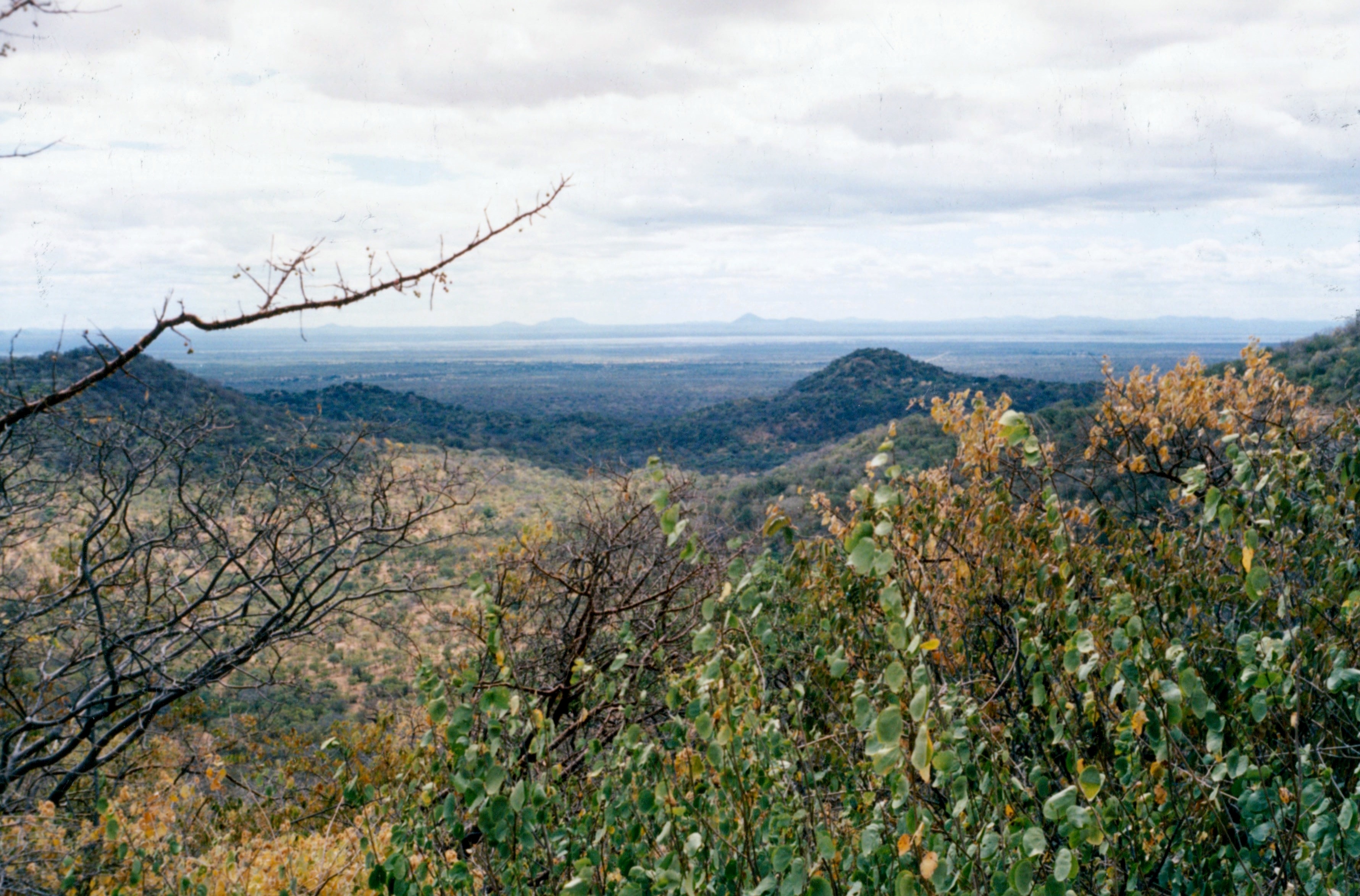
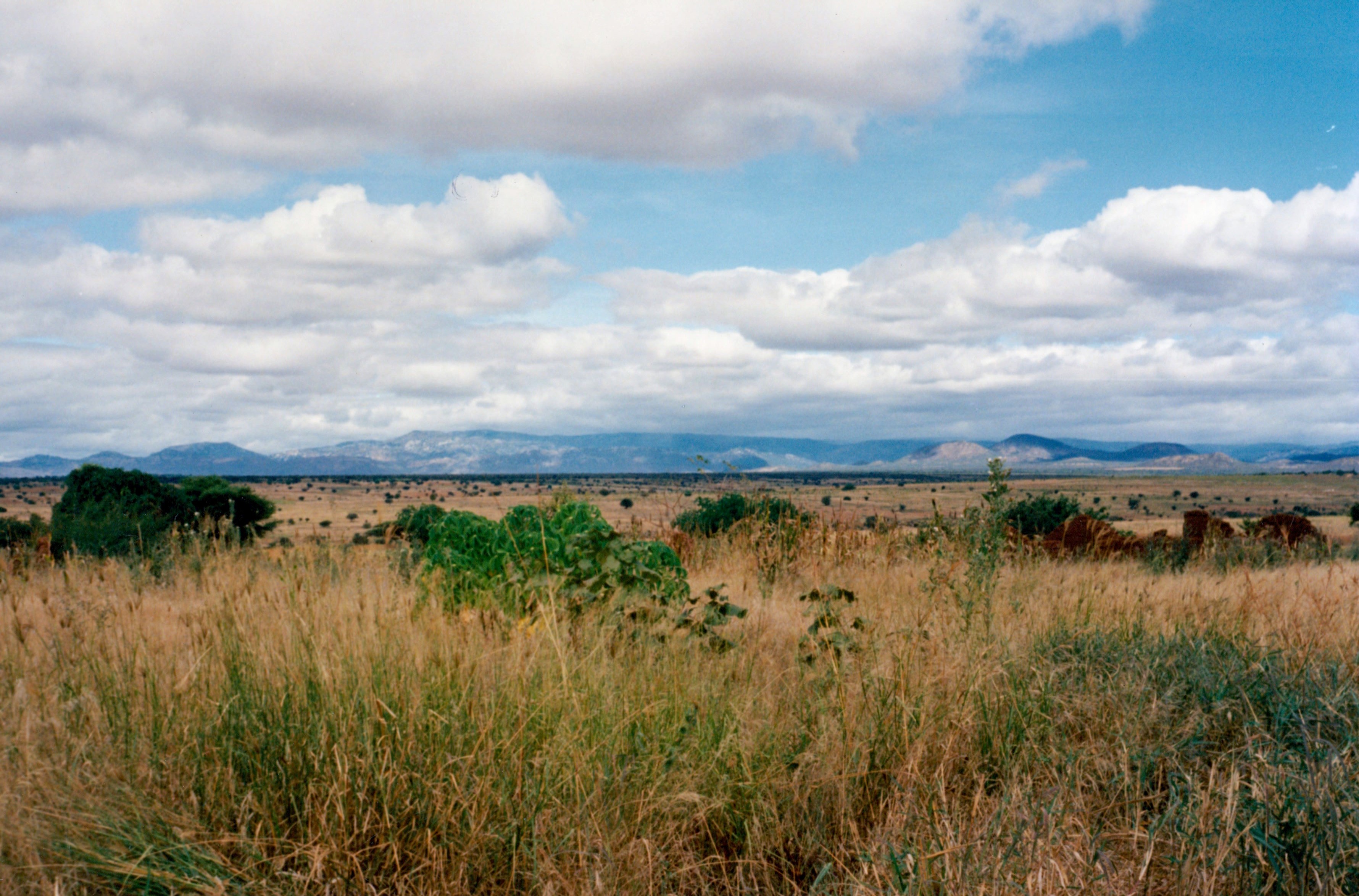
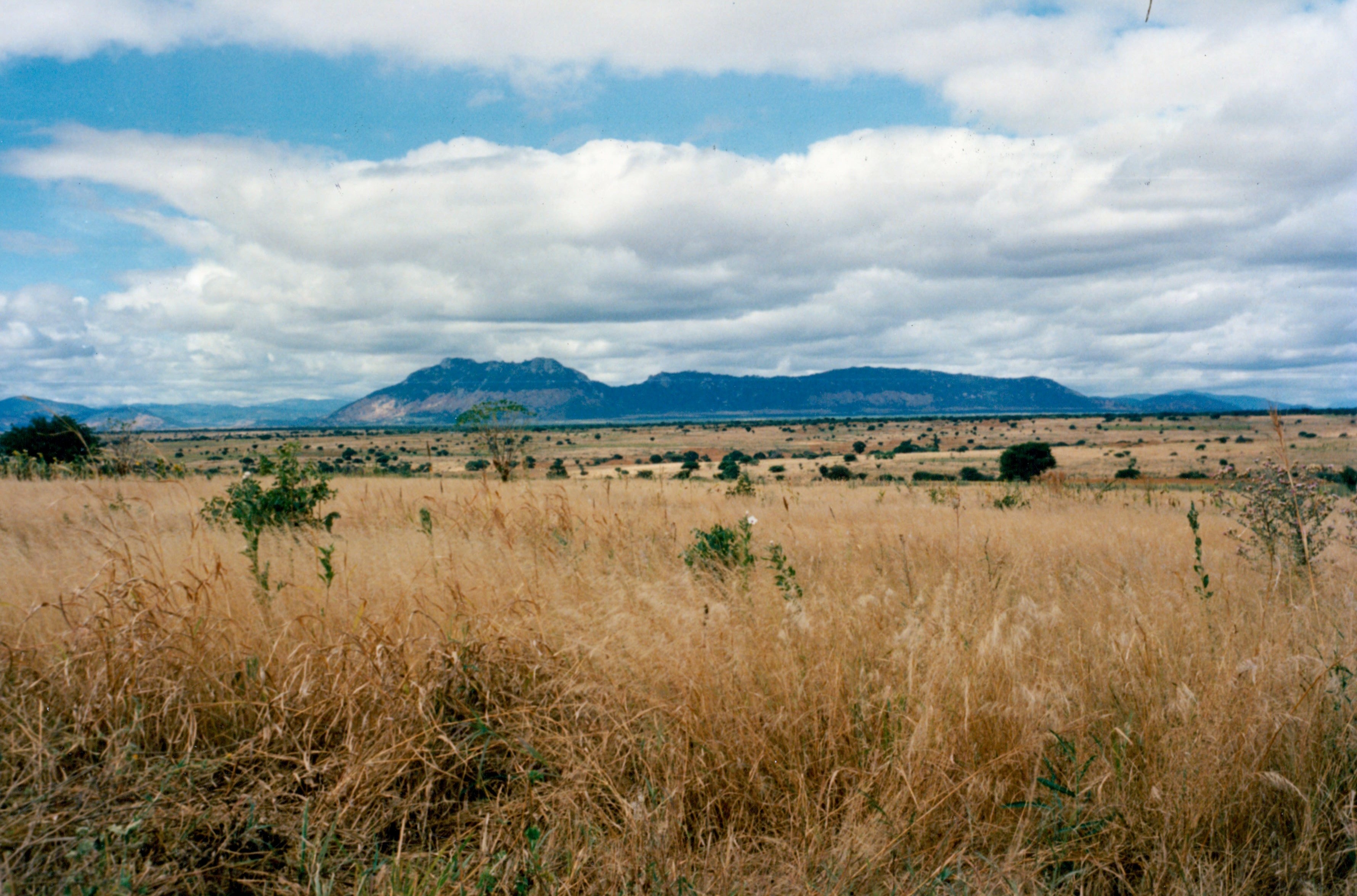
We have another lovely ride through the dawn out of the Highlands that morning and on up into the last range before the Zambian border. At Mbeya we have a large breakfast and on a glorious day drive the last 70 miles to the border.
Zambia
The border proves easy and we even manage to change a travellers’ cheque with the officials there to buy some insurance. We head south quickly with a manic plan to get to Lusaka the next day some 800 miles further on. Late in the afternoon we get our first and only puncture of the trip which has been caused by Leigh’s tyre carcass splitting from hitting a pothole the previous evening. It is almost dark when we arrive at the government rest house in Chinsali which proves to be an unmissable experience. A relic from colonial times when the District Commissioner did his rounds, we are not sure who is now qualified to use the rest house. We think that we are because at least if we were there we could not be engaged in spying. The Zambian government encourages citizens to assume that all foreigners and especially backpackers are spies after some South Africans had been caught in such a guise. Throughout the rest house, posters exhort Zambians to beware of foreigners plotting to take the country over, that careless talk costs lives and to report corruption to the anti-corruption committee. We order some supper and are invoiced for each egg, chipati and cup of tea separately and need to show a voucher prior to eating them.
Next morning we are gone by dawn and in an incredibly uneventful day’s ride get as far as Kabwe – formerly Broken Hill. The roads in Zambia lack variety as all the towns are set off the main road which is lined with tall grass and scrub. Our route follows the line of the Tan-Zam railway built by the Chinese in the early 1970s as Zambia’s link with the east coast of Africa.
Each bridge is its own military zone with armed guards. We see no movements on the railway and learn later that because of fuel and spares shortages there is far less traffic than there once was. The road is excellent asphalt but devoid of cars and lorries and almost all of the old roadside cafes and bars have closed down. This is largely due to the general economic state of Zambia which has suffered years of low copper prices — the commodity on which the confident post-independence economy had been founded.
We stop the night in the rest house in Kabwe and leave at 4am next morning in order to get to Lusaka early for a breakfast at the Andrews Motel. We ride through a long and cold dawn and arrive in Lusaka – only our second capital of the trip in the middle of the rush hour.
The route south passes through a modern city centre of large concrete buildings with an Aeroflot office prominent. We linger over our breakfast for a couple of hours taking in what seems to us by now vast quantities of egg, bacon, sausage and toast but which is probably only as much as an ordinary English breakfast. We turn our bikes south once more and head off for the 270-mile stretch to Livingstone and the mighty Zambezi River. There are a number of roadblocks at which we have our passports inspected upside down but the day is warm and the biking wonderful. We drop off a long range of hills and stop in a market town where we buy cheese at a butchery.
To Livingstone and the Zambezi River
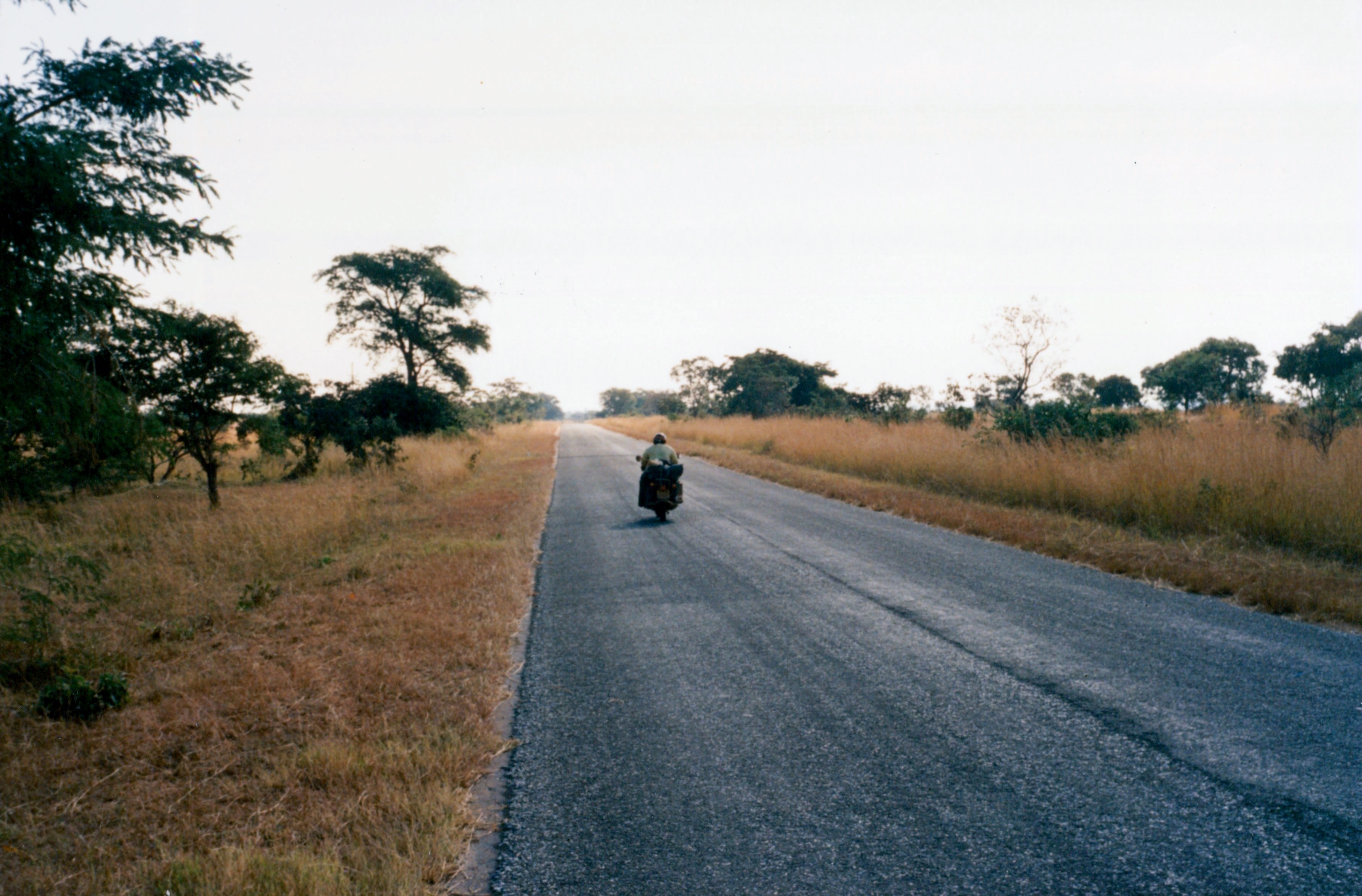
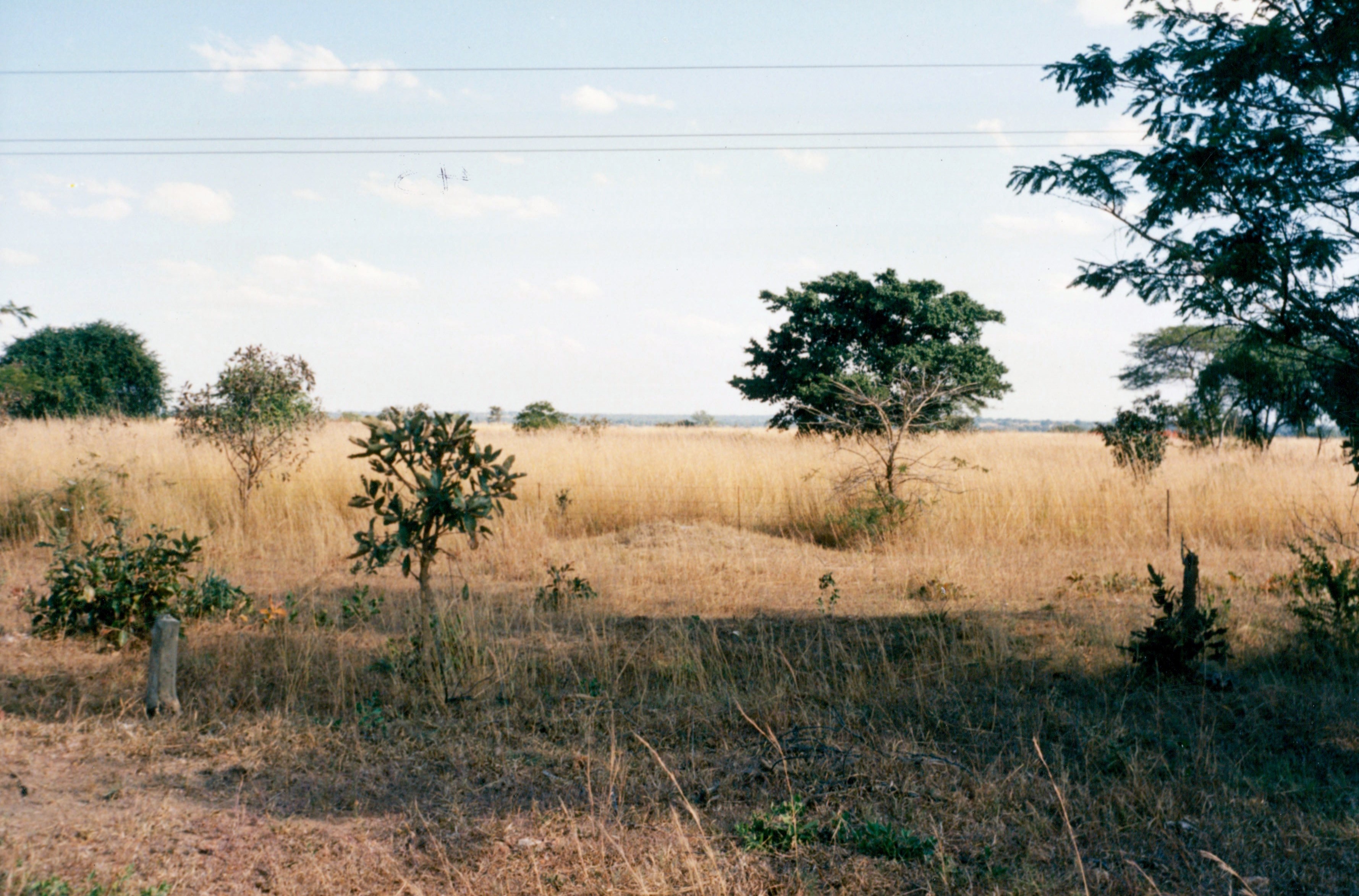
We trundle on through the long, hot and carefree afternoon. The scenery is unchanging – a mixture of tall burned grass and low trees.
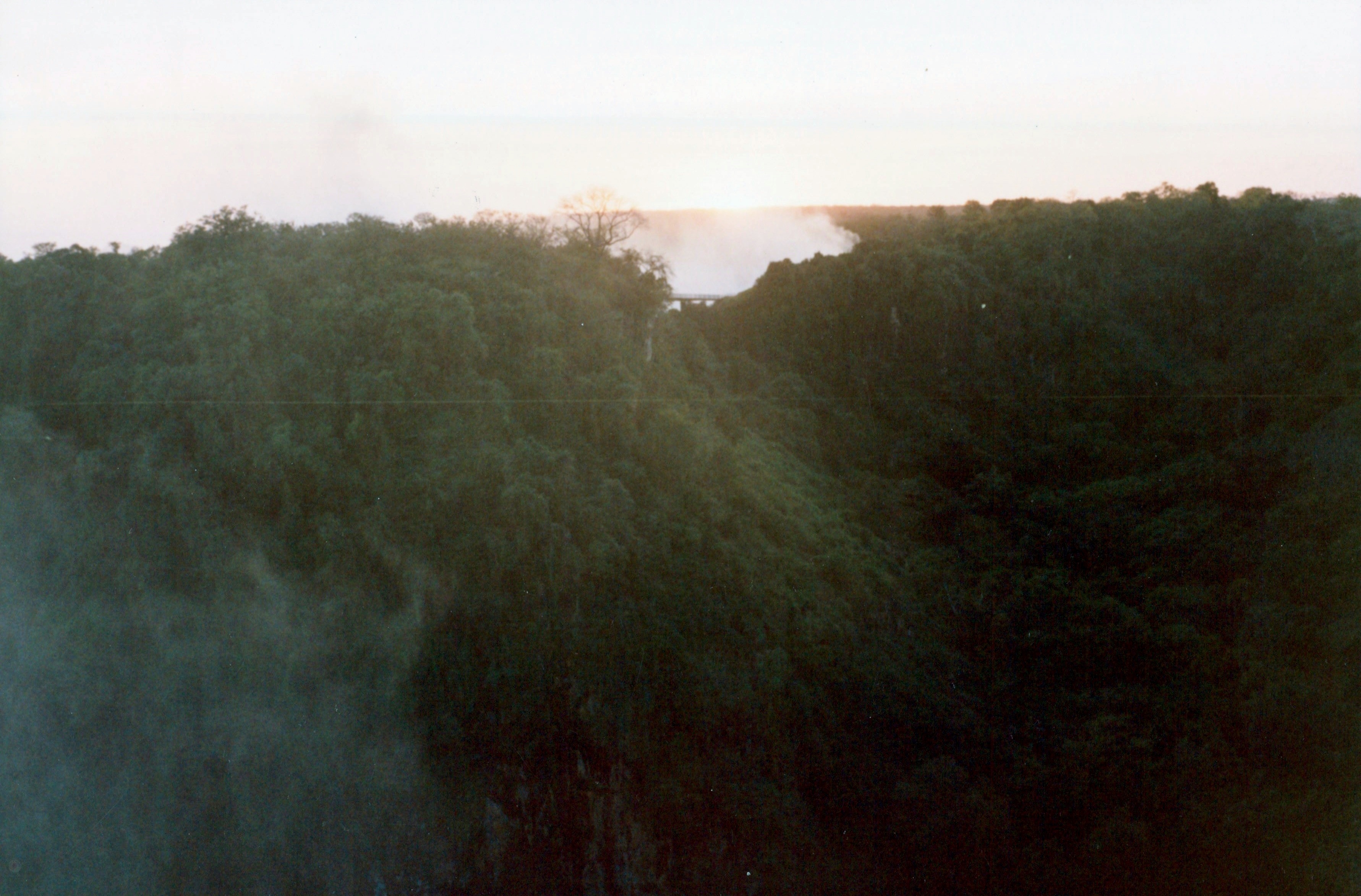
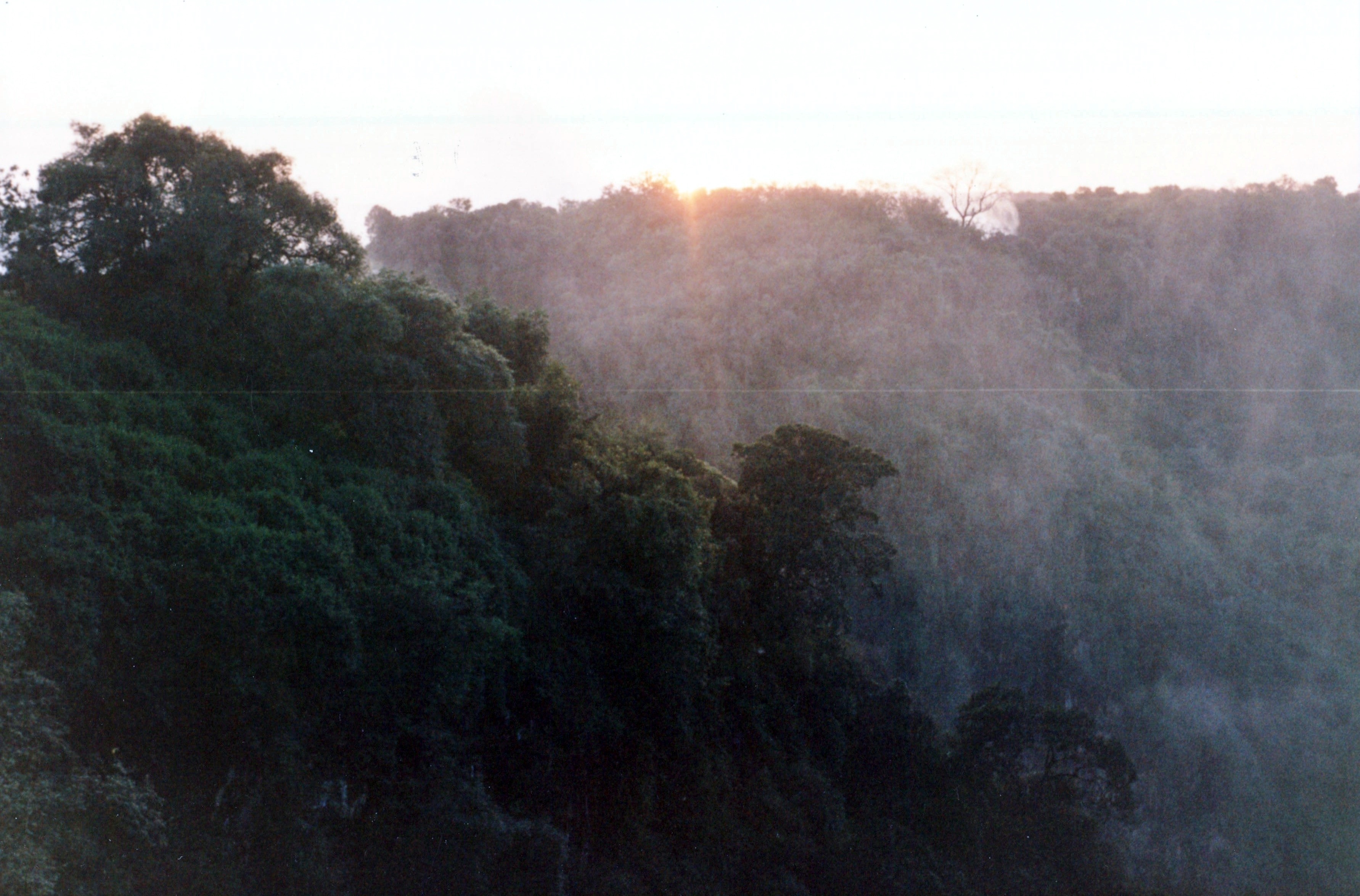
We reach Livingstone having done 400 miles for the second day in succession and with ease. That night we stay in the comfort of a rondavel, a circular African hut, by the river close by the Victoria Falls. Next morning before dawn we walk down to the Falls – the noise of which we have been able to hear since we arrived. We sing and whistle the old Eddie Calvert song Zambezi as we stumble around in the half light and are hysterical with excitement as we get closer. There is a walkway to an island from where you can see a small part of the falls themselves and get soaked by the waves of spray that rise over a 1,000ft above the tumultuous river. The whole scene is so vast and obscured by water vapour that it is hard to get a real impression of just how massive the falls are. It is left to the overpowering roar of billions of gallons of water falling a quarter of a mile to remind you just how powerful the scene is. By the time we get back we are soaking wet from the vapour and shiver throughout breakfast until we dry out.


We decide to cross into Zimbabwe to get a view of the falls from the southern side but head off into Livingstone first. The town is set back some three miles from the river and has wide tree-lined streets and old low shops arranged in blocks each with its own individual facade. We have lunch at the busy burger bar and then visit the Railway Museum.
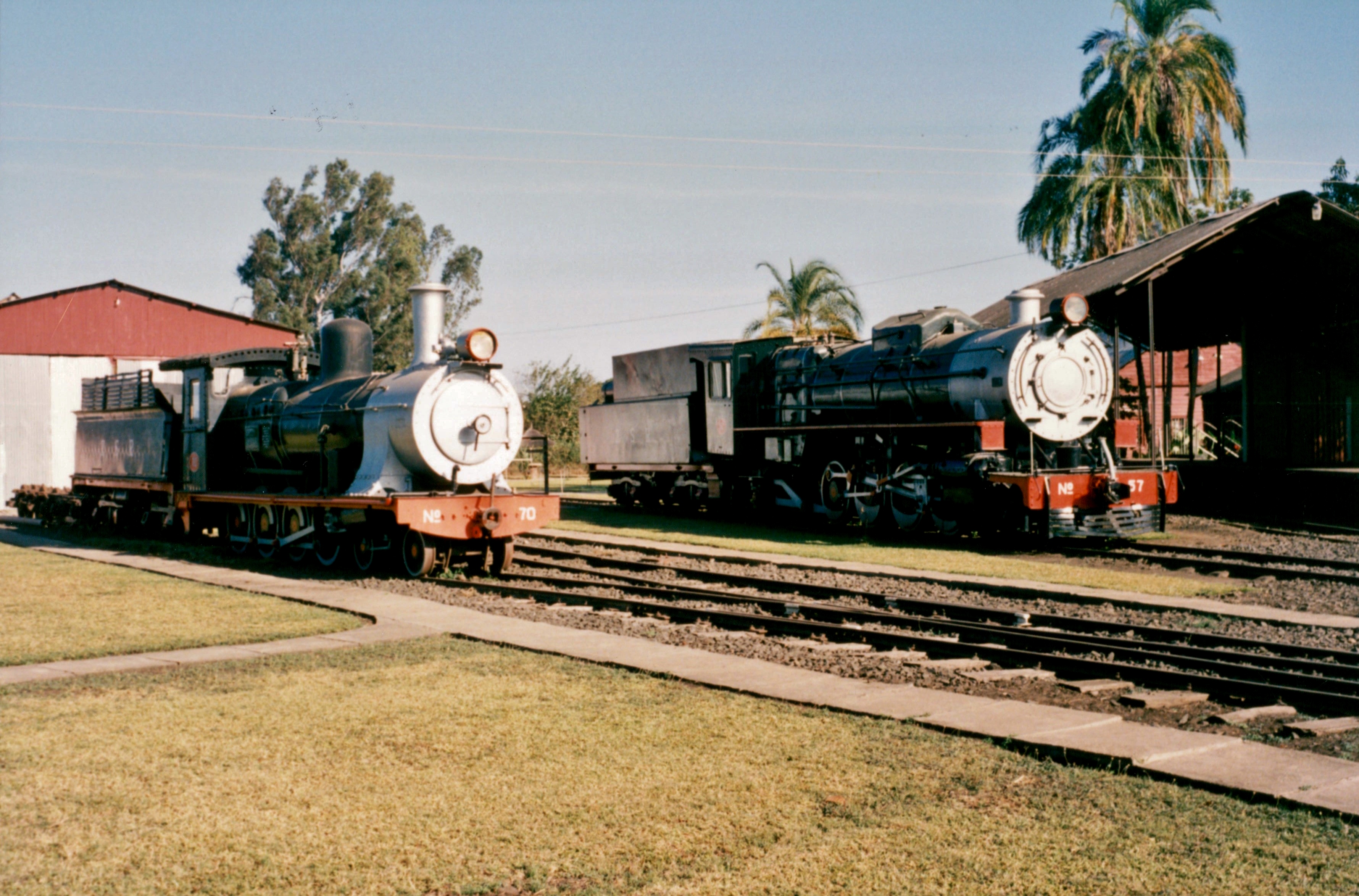
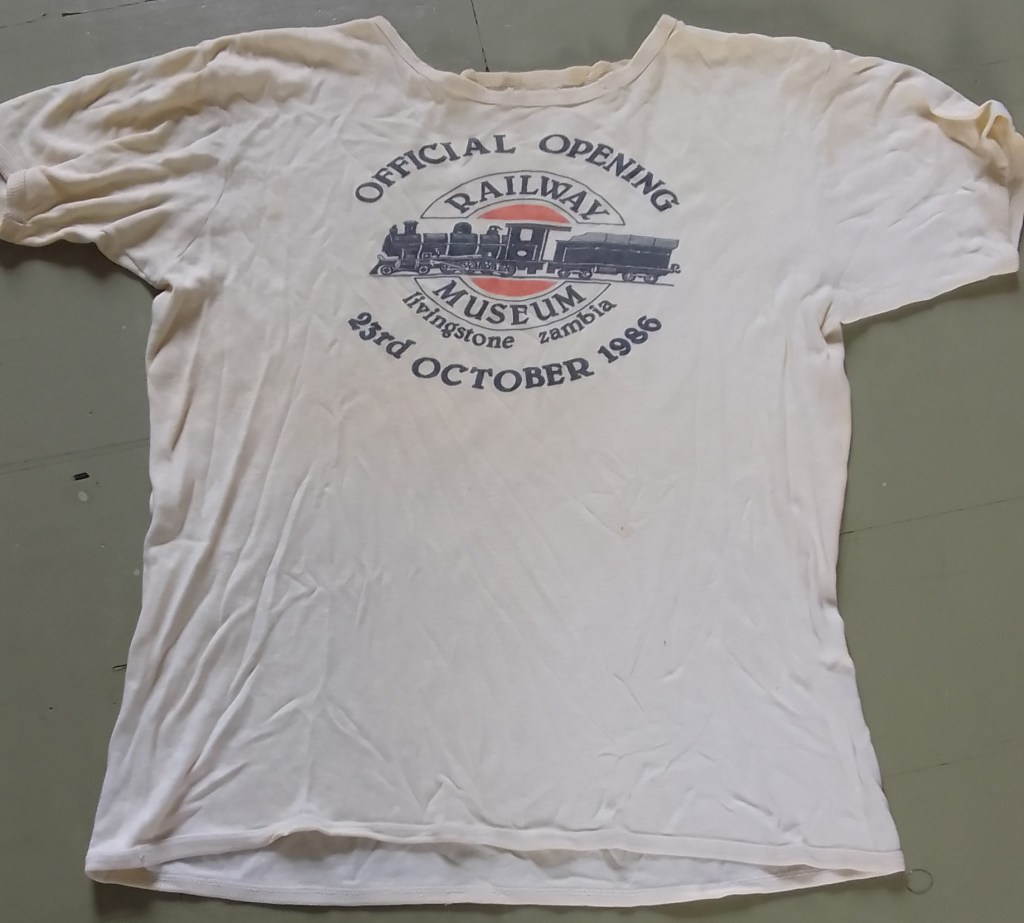
Here we purchase the trip’s first souvenirs – two T-shirts celebrating the museum’s official opening a few years before.
In keeping with Africa, both of the shirts have different dates on them.

Zimbabwe and Victoria Falls
We ride off to the Victoria Falls bridge and cross what looks like a single span section of the Forth Road bridge high above the cauldron of churning water. We enter Zimbabwe, get our carnets stamped and play the insurance game. I come clean and buy some while Leigh proffers his worldwide comprehensive policy. We are not surprised when this is rejected but are delighted when told why. As it is comprehensive, it does not cover third party claims. We pay up, have a chat with the customs guy and are told that constitutes the search and head off into the town itself. There are flowers and bushes lining the streets with perfect pavements, sensible drivers, an immaculate railway station and up ahead a Wimpy bar. We check in at the thick pile grass carpeted campsite and walk around the town before pouncing on Mr Narayan’s takeaway and removing most of his samosas. Back at the campsite we meet a Canadian couple — Andy and Jenny – and agree to meet them for a drink in the Victoria Falls Hotel after supper.
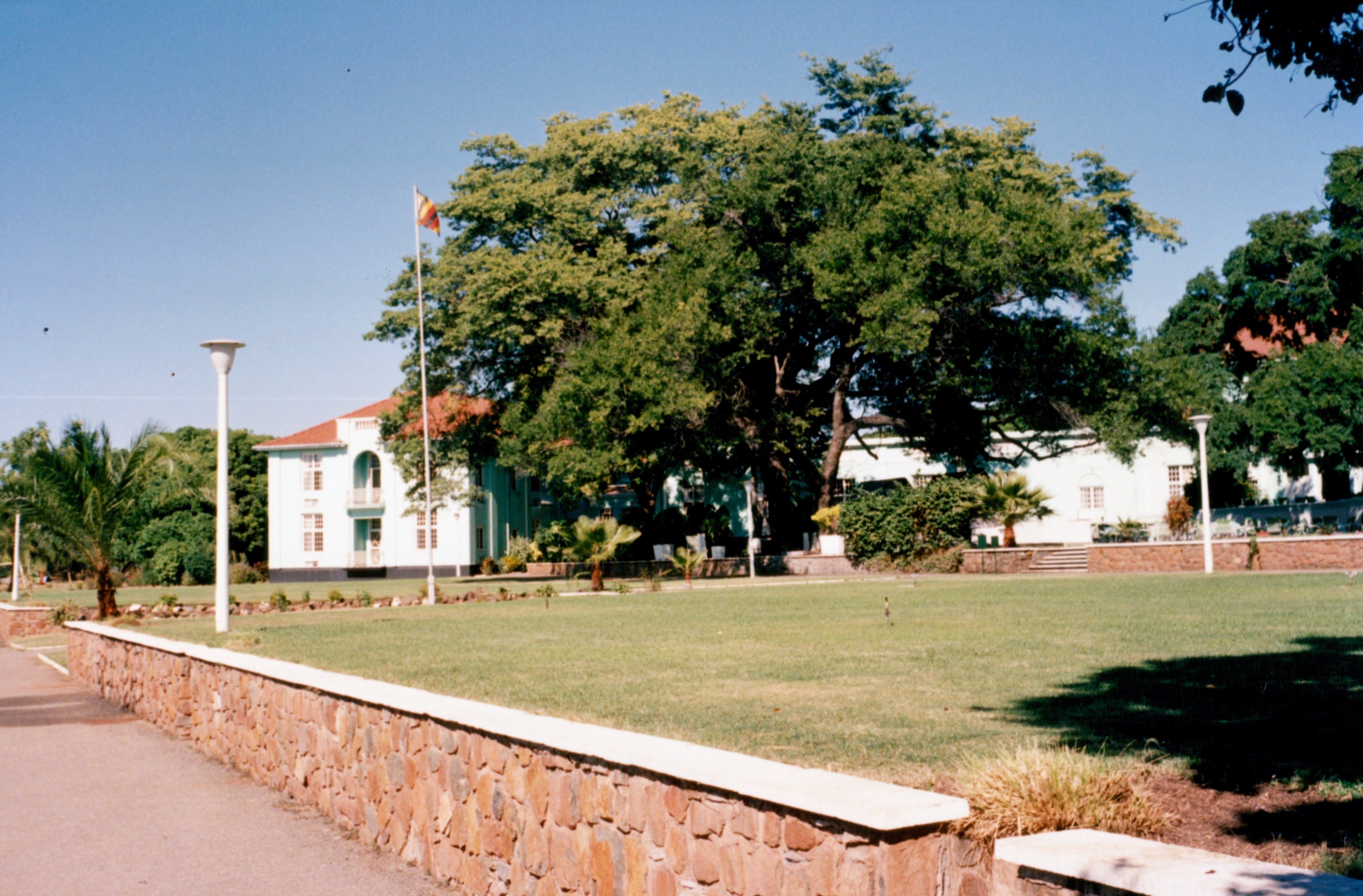
The evening in the Hotel will fade from the mind very slowly. The Hotel is not anything remotely related to the Africa that we have passed through but tonight that scarcely matters just as the pizza in Marrakech scarcely mattered. The hotel is stunning with chandeliers, white walls and enormous rooms off each corridor. No one cares that we are wearing forbidden informal footwear known as “tackies” or that we clearly come from the campsite. We sit on the terrace amazed to be here and tell most of the improbable stories of our journeys to date. Below is the outside dining area where the residents are finishing off their evening meals. Farther on are the Falls themselves and there is a full moon rising above the spray. Under a canopy a steel band is playing.
Next morning we return for a protracted eat-all-you-can breakfast. We wander down to the falls again and its sheer immensity can be seen clearly for the first time. The main ridge over which the water cascades runs for nearly two miles across the river before reaching the north bank.
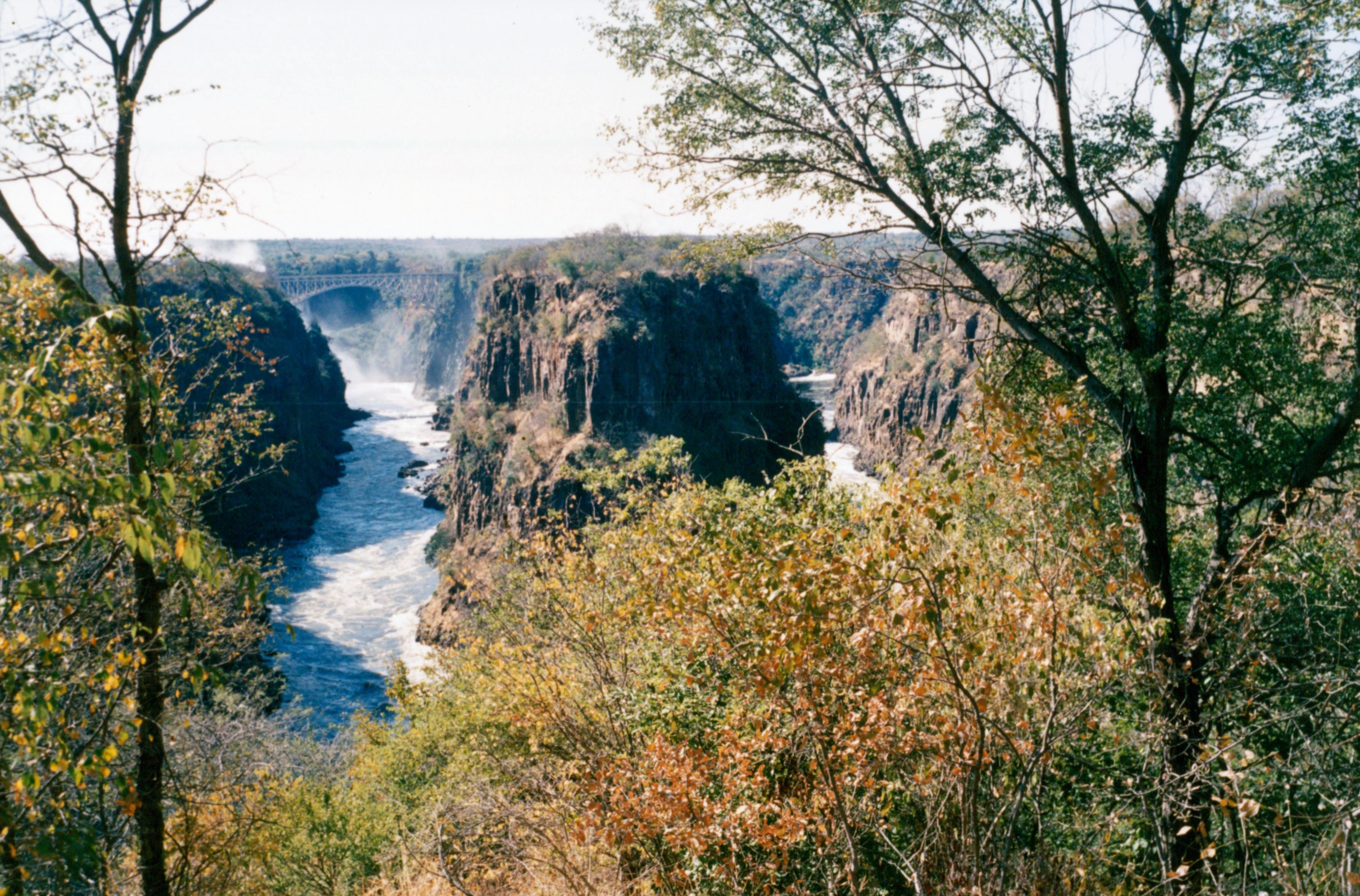

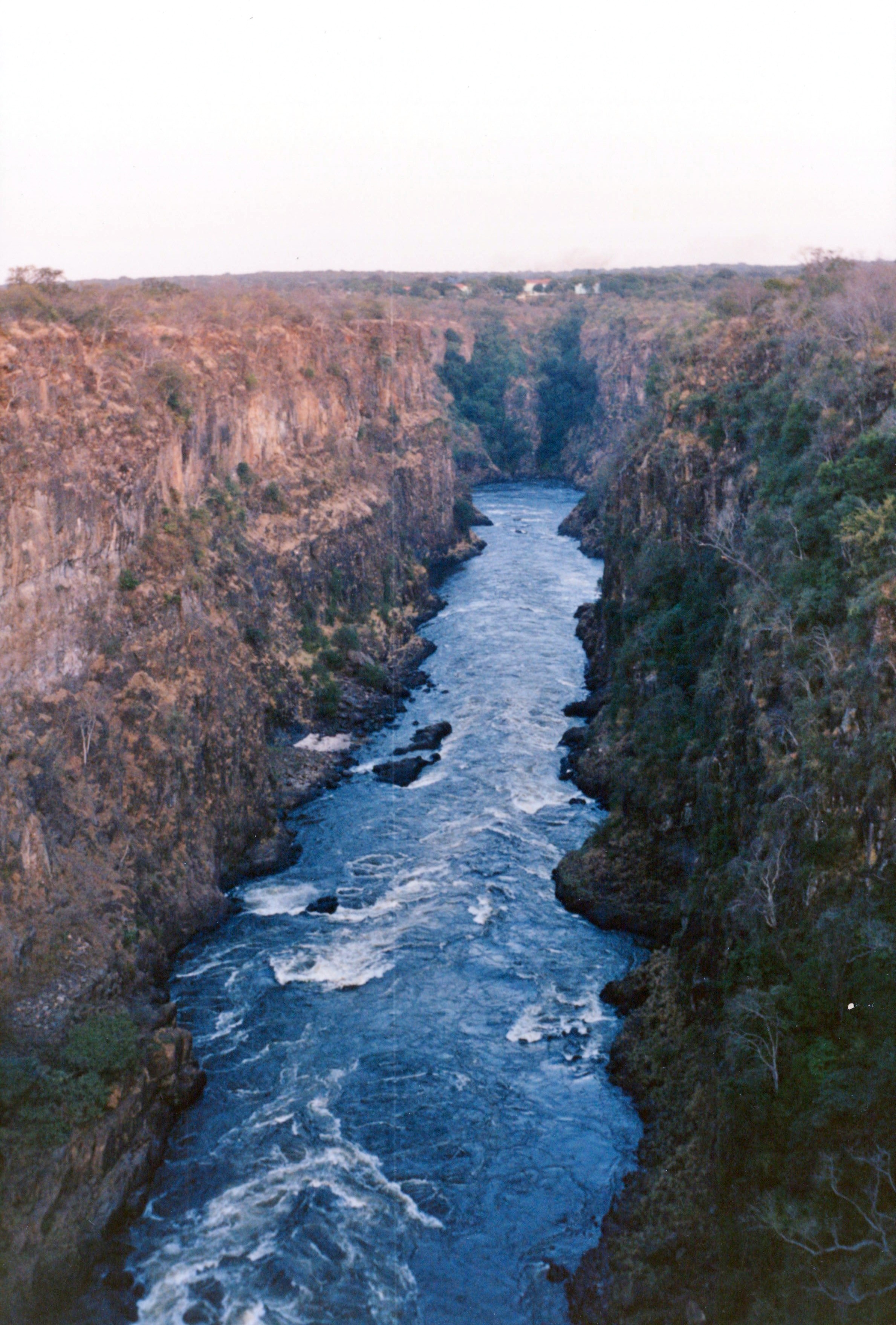

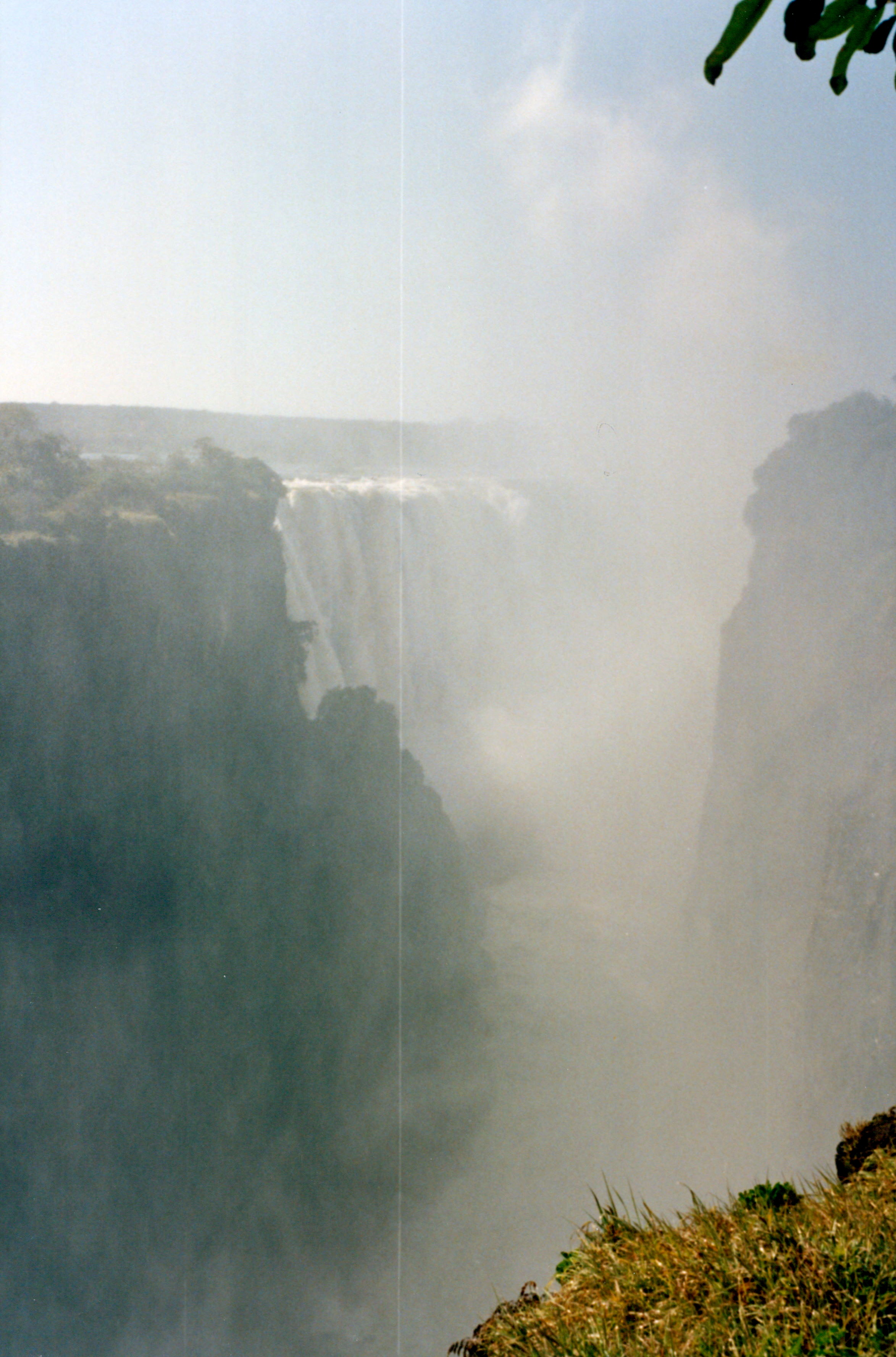
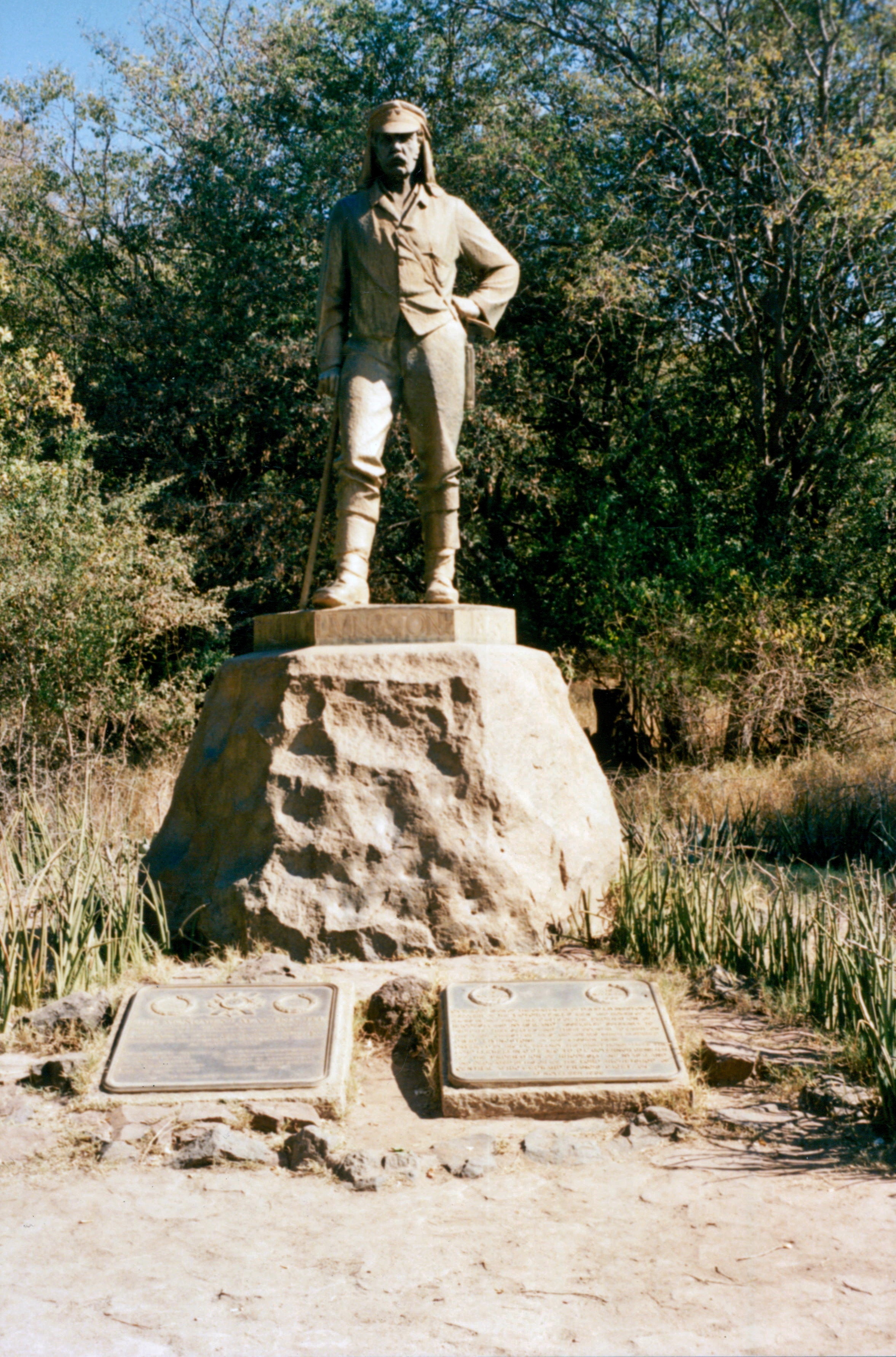
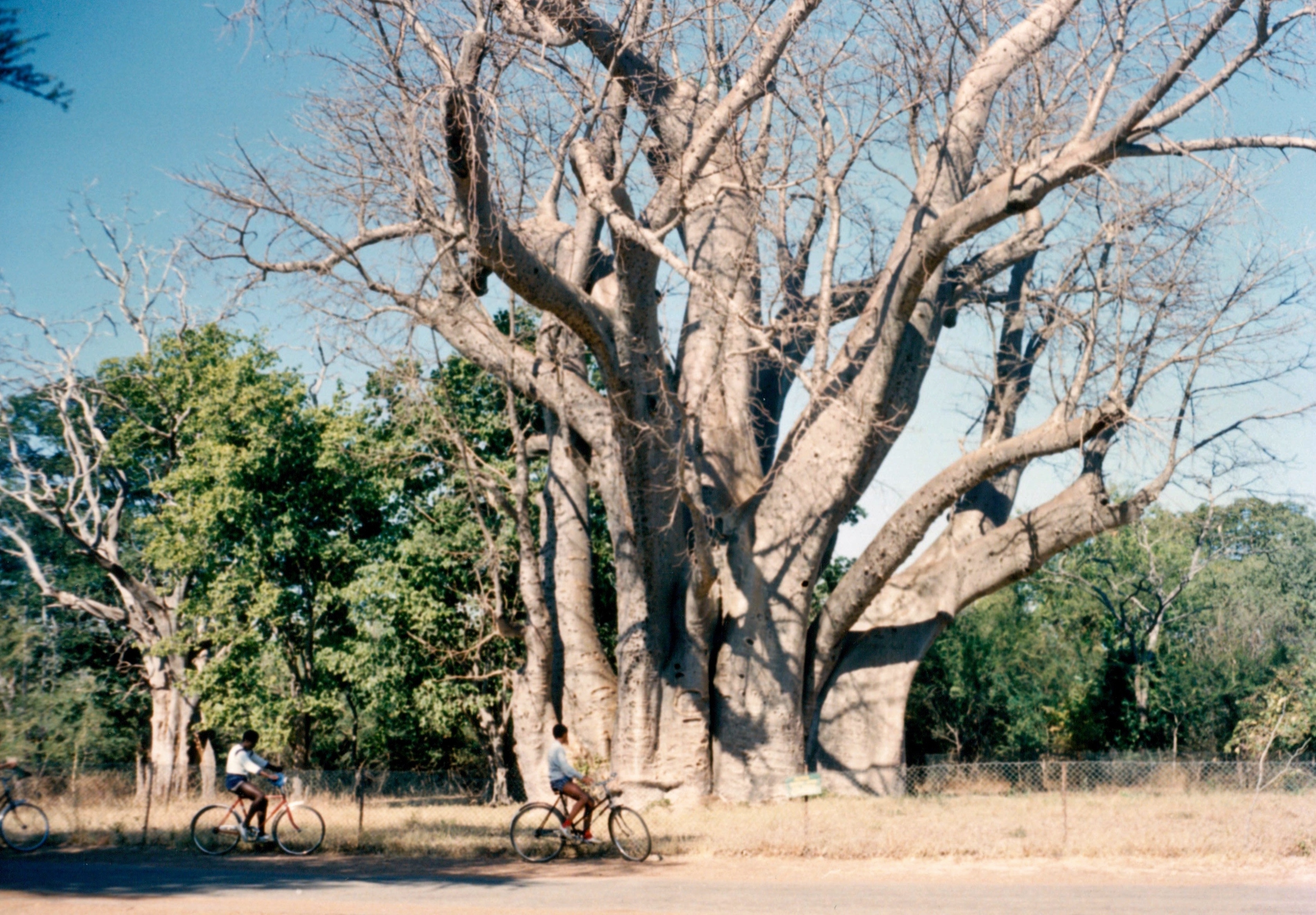
We walk along a tongue of land to its far end where the water has cut a gorge through the rock and from where the river meanders off to the east. Merely standing here you get soaked but there is a double rainbow in the spray. We wander back along to the Livingstone Memorial before a circular drive takes us to the Big Tree – one of the world’s largest baobabs.
 Africa Overland 1988