To Plymouth
We are now 24 hours from our third ferry deadline for the sailing from Plymouth to Santander in northern Spain. We had no hope of tickets for the one the previous Saturday and changed to the Tuesday sailing. We then realised we were still not ready to leave are now booked on tomorrow’s Sunday sailing. We are still in London and the bikes have yet to be loaded up. Hopes of a trial run on them down the ancient track called The Ridgeway fully laden vanished weeks ago and it is now a case of just loading everything on and trying to get to Plymouth. We are sure that every day is crucial in reaching the desert before it becomes too hot although we have no idea for what. Leigh arrives about eight a.m. but soon disappears to purchase the crucial bin liners. I prepare breakfast and survey the chaos that covers the floors of three rooms all of which we hope will fit on to two small motorcycles. Leigh returns and we spend a nervous hour drinking coffee and fretting. The moment of truth is near and we go outside to load up.
By noon we are ready. We assure each other that loading will become easier as we both get used to it. More delays come packing the two wire cat carriers that we have purchased as lightweight strong boxes. These are fixed to the bikes’ rear carriers by an assortment of clips and bolts and provide much entertainment but little security. A party consisting of Leigh’s brother and his girlfriend laughs, photographs and hugs us as we set off. It takes both of us to get each bike out of the yard and on to the road. We wobble to Clapham at nothing over 20m.p.h. At Putney Bridge we rendezvous with Leigh’s other brother Kevin who has been asked to do some very dubious things with some Nat West headed paper and a personal credit guarantee letter. We have read that to get through the border to Niger such guarantees are needed-in French. These we now have signed by Kevin Smith our own very friendly Bank Manager. The afternoon is fine as we head down the M3 into Hampshire and on past Stonehenge. We stop a couple of times amazed at having got this far with all this stuff. At dusk we stop to drink hot chocolate at a Little Chef. Nobody notices us, points at us or remarks upon the overloaded bikes that we somehow believe are about to take us to Southern Africa. We ride into Plymouth, find a bed and breakfast and set out to find a last curry. Leigh decides to chance his arm on a phaal of nuclear proportions that sets his stomach up quite nicely for the next six months.
The next morning, we breakfast and go down to the docks where our adventure begins.
We have been planning our trip for some four months. The most time-consuming part has been to obtain the Carnet de Passage. We are taking two Honda 250 c.c. single cylinder road bikes – without a doubt not the professional’s choice. They are both high milers with over 100,000 between them already. They have barely been converted to overland spec – the tyres are on /off road Pirelli MT40s, they have petrol tanks off a Honda 650 and 750 respectively and we have made up panniers which will carry a 20L jerry can for petrol and a 20L water container. We have grave doubts about the power to weight ratio but even greater ones about the power to bulk. We know both bikes to be reliable as we have despatch ridden both of them for many months around London.
The ferry to Santander takes 24 hours. Our expectations of the sea in mid-March are proved entirely wrong as the Bay of Biscay is utterly calm and there is not a cloud in the sky. We dock the next morning and mooch around Santander keen to book our tickets to North Africa. This we fail to do and then head out in the wrong direction finishing up north east of the town but with a fine view port once again.
Spring in Spain and Portugal
We have decided to go west through Northern Spain to see Galicia and the Picos mountains. The countryside in early spring is very green. We begin to climb into the hills and get views north and south of bare limestone crags. Our first night is in Oviedo, an industrial centre in Northern Spain. We ride the next day high into the hills; it is fine but the spring is no further on than it had been in Streatham. We would have to wait until we reached Seville until we saw blossom again. We stop for coffee by a dam and are shown the roads we should take along the main coast road. At the moment we are in no hurry and take only minor roads indicated on the Michelin map in yellow. We are settling in to our long journey. Leigh and I have travelled together a few times before during holiday trips through Europe but realise that this will be very different. At times we may be heavily reliant on one another and could easily come back not the buddies we once were.
We arrive in Lugo the capital of Galicia in late afternoon. It is busy at that time of day with its narrow streets and large squares. We find a room and go out for a meal in a neon signed dungeon bar serving pollo in a dozen not so different deep-fried forms. The next morning, we are the only customers in a large wooden panelled cake shop where we consume excessive amounts of coffee and croissant for breakfast.
The next day we travel a long way south into Portugal. We come across our first non-asphalted section of road where we are amazed to able to maintain a heady 35 m.p.h. The smallest reassurances become important as our knowledge of what is to come is at best minute. As we cross a high pass, we experience our only snow of the whole trip and a wind so strong that we and the bikes are barely able to stand up. At the Portuguese border we chat to the guards in English for some time. Horses and carts are being driven home in the early evening sun along the bumpy roads. For the first time people are waving to us. We come across very few cars until we arrive in Braganza.
We stay in Braganza a couple of nights. The first evening we walk up to the old walled town. There is a castle and a church and although it is nine o’clock there are scores of people streaming up to attend the evening mass. The next day we visit the local museum and the castle again, reading and chatting in its grounds. In the evening, we eat in a large and very old hotel. The fish we order is served on silver plates by a lady in along white dress to the accompaniment of baroque music.
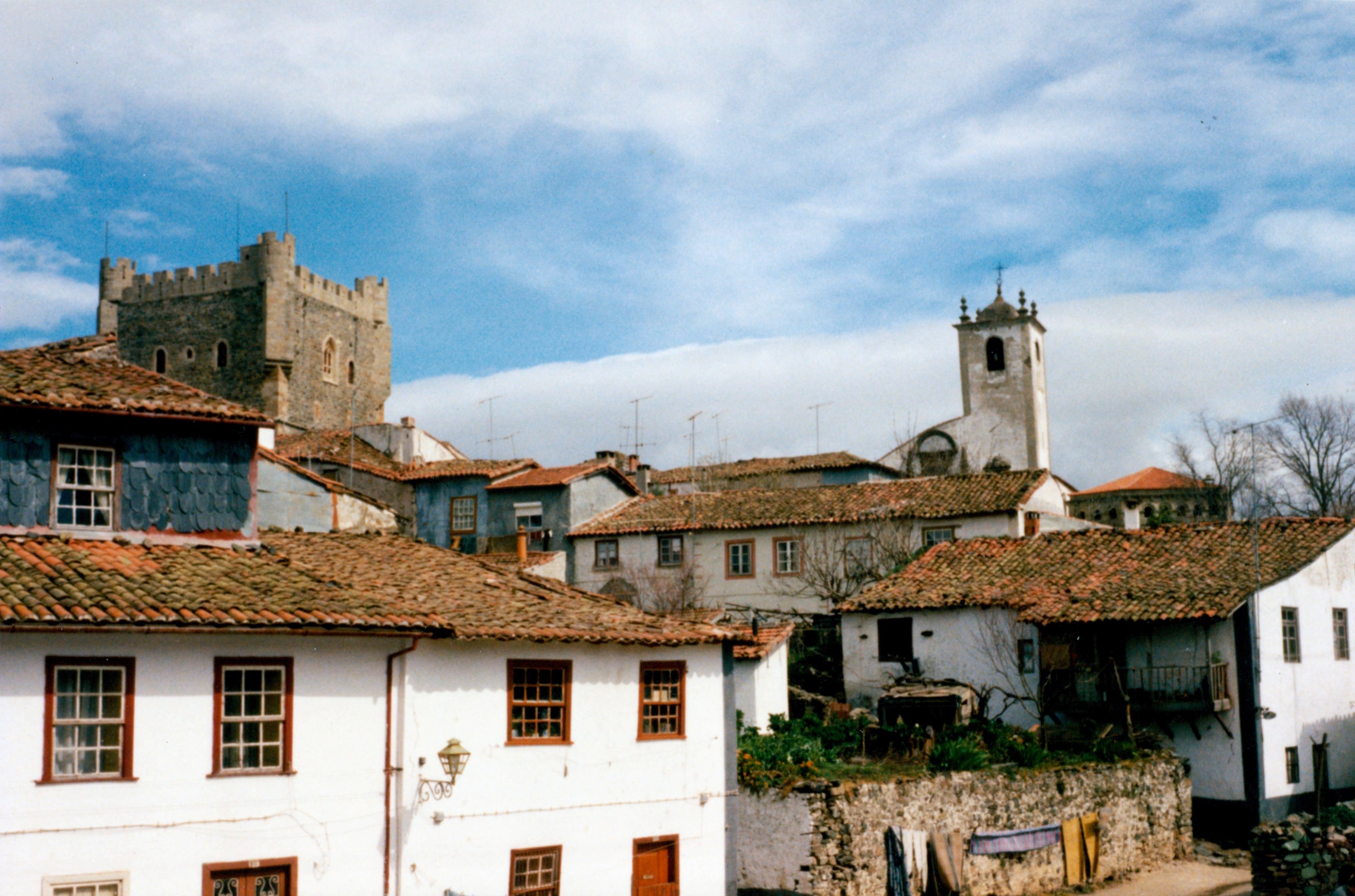
Braganza especially in the evenings feels quite detached from the rest of a more modern Europe.
We leave the next day for a wonderful ride through the Trasos mountains of Northern Portugal.
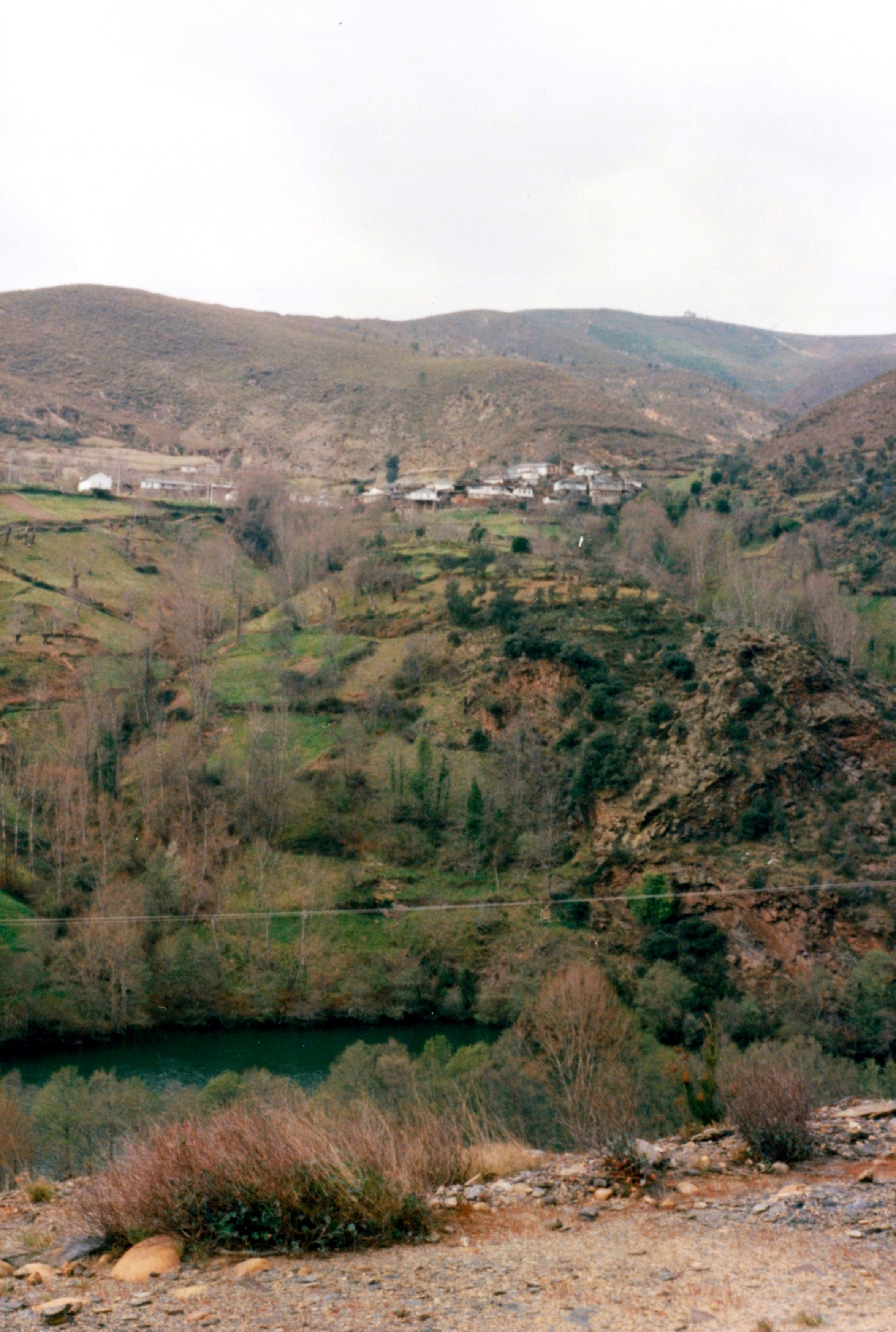
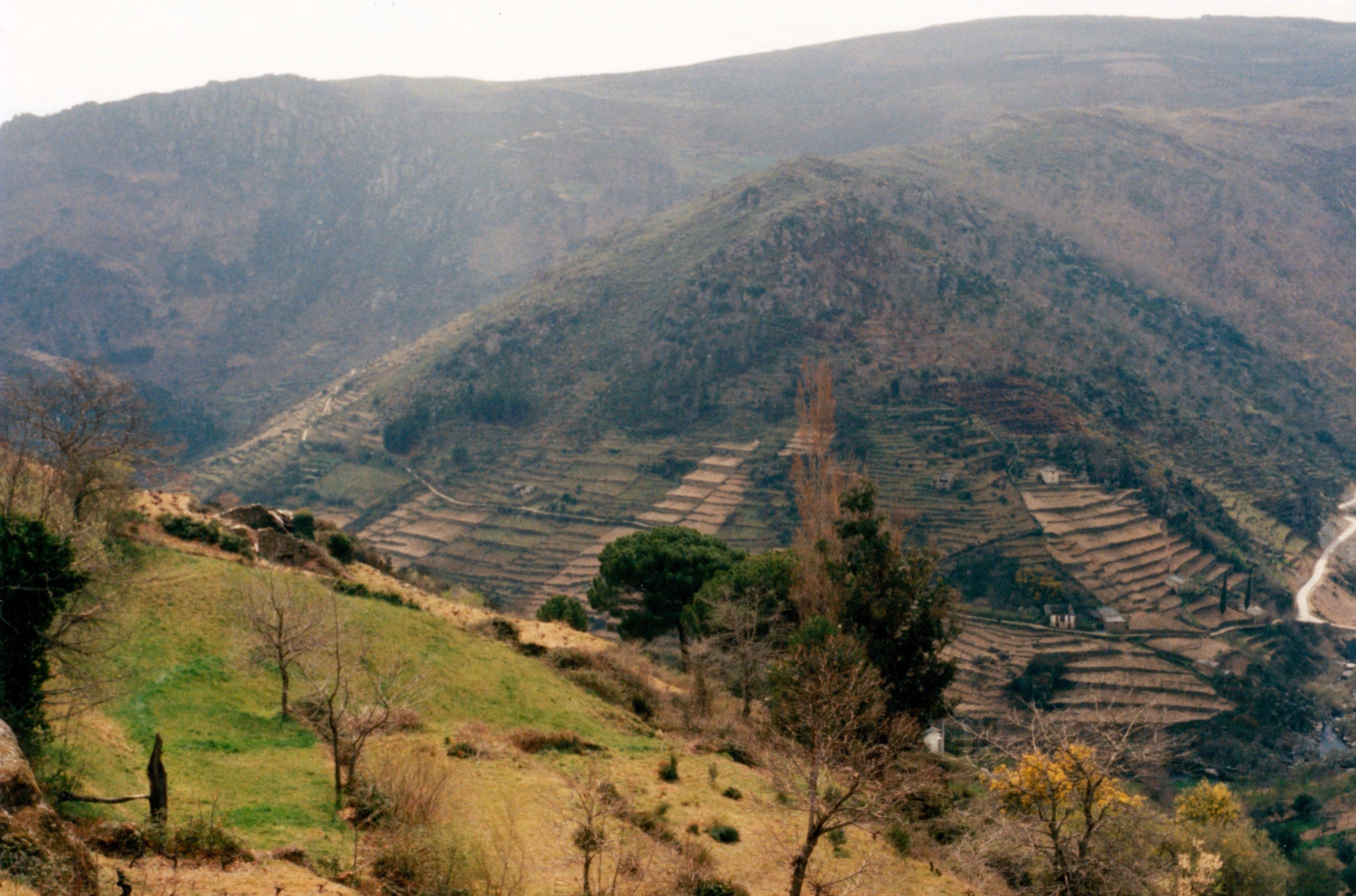
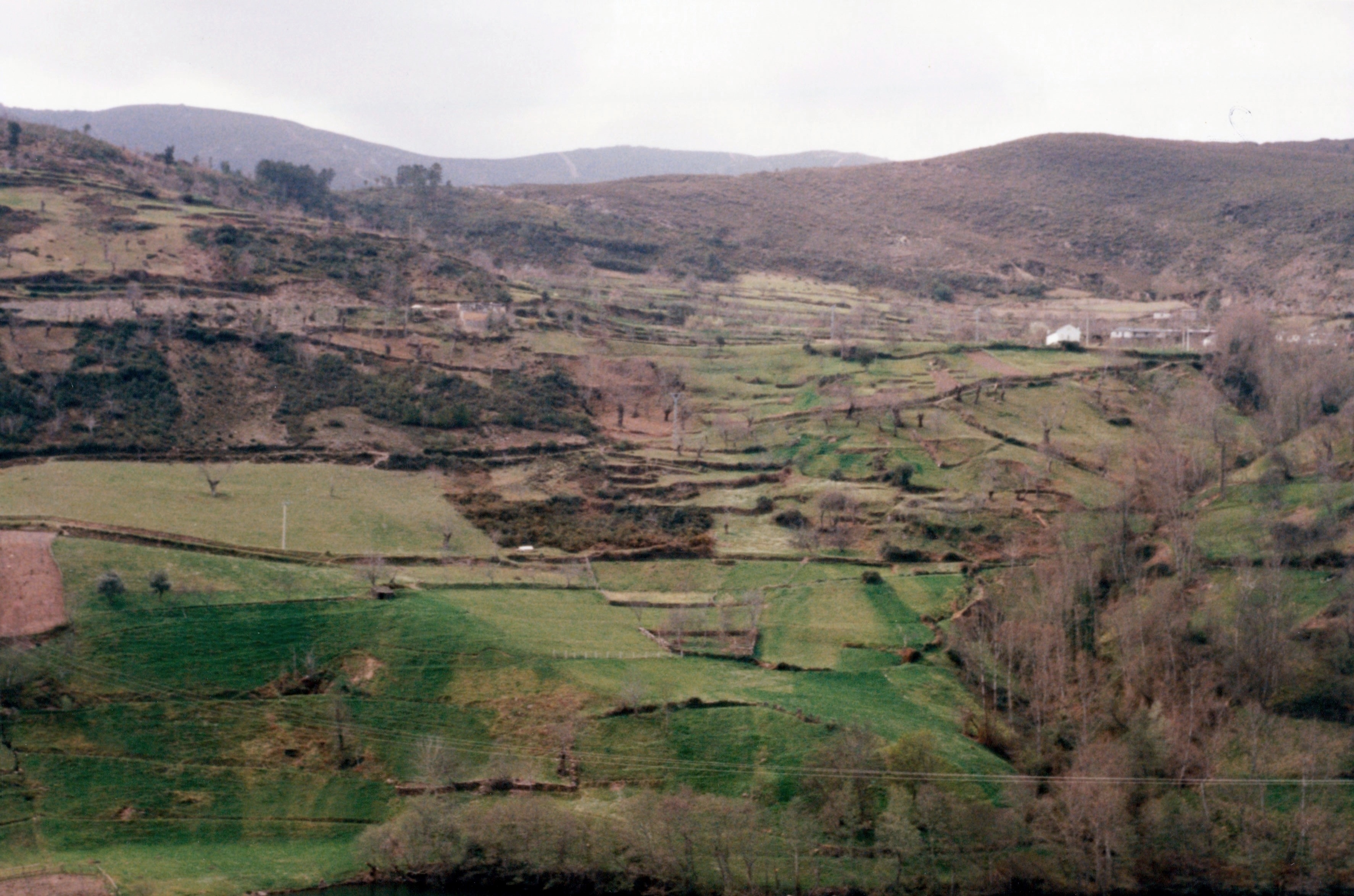
It is March and we are this year’s tourists come early. Spring is hot and the terraced hills are busy being prepared and planted. We are riding slowly — getting nowhere.
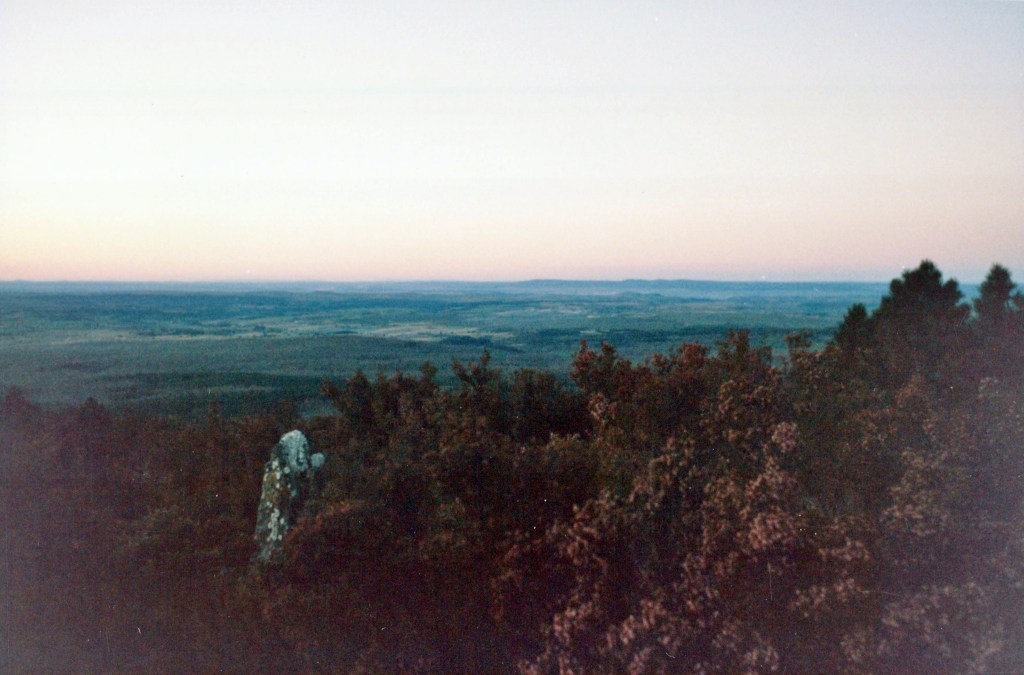
We take one of many wrong turns and end up in the village that time forgot to the amazed stares of the locals. Later in the afternoon we cross back into Spain and head south towards Plascencia. We are now right on the plateau that makes up the heart of Spain and at dusk cross a high pass from which there is then a slow and difficult descent in the dark into the town on the plain below.
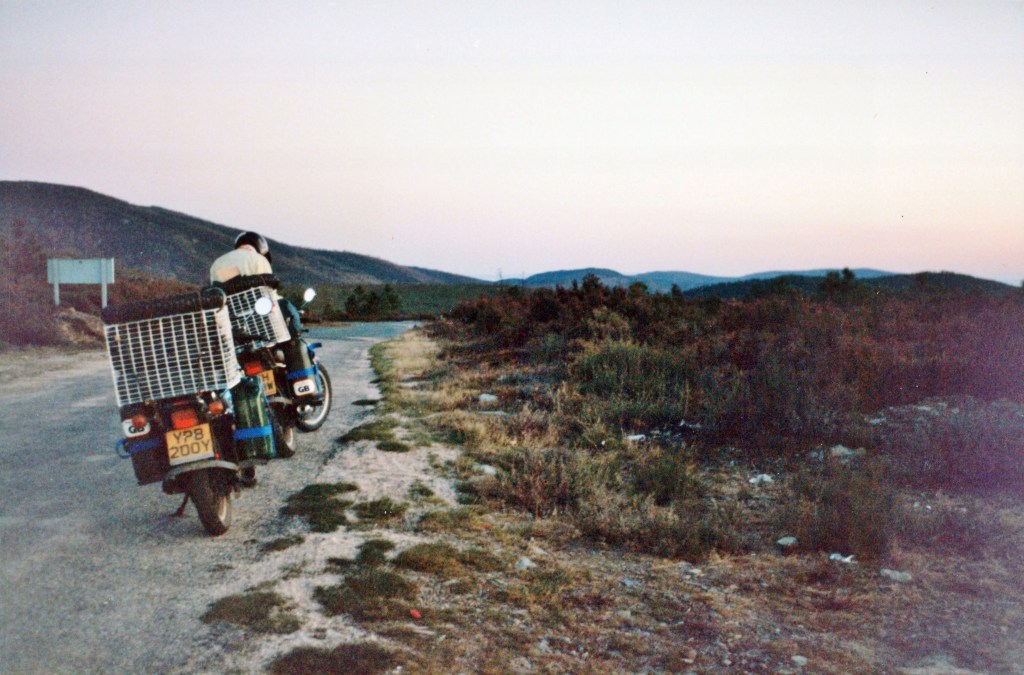
The absence of planning for the trip is now laid bare for all to mock. We had purchased two new and highly sophisticated tents – the type with bending poles – and although we had both insisted that we should erect them prior to our first campsite nothing of the sort had been done.
We are now at a campsite that is closed but for the gates themselves and in the pitch black we are trying to put these things up. During this sad and ill-tempered two hours we chat to a Dutch man who is just back after a desert foray in an incredibly well-equipped Toyota Land Cruiser. He analyses our equipment and says that the cat carriers stand no chance (correct), because of our bikes we should stick to the main routes and asphalt especially as much as possible (correct) and we should get rid of as much junk as we could before the asphalt ends (extremely correct). Equipped with this knowledge we go for a major strategy meeting over a late dinner and change our plans for the nth time.
Seville
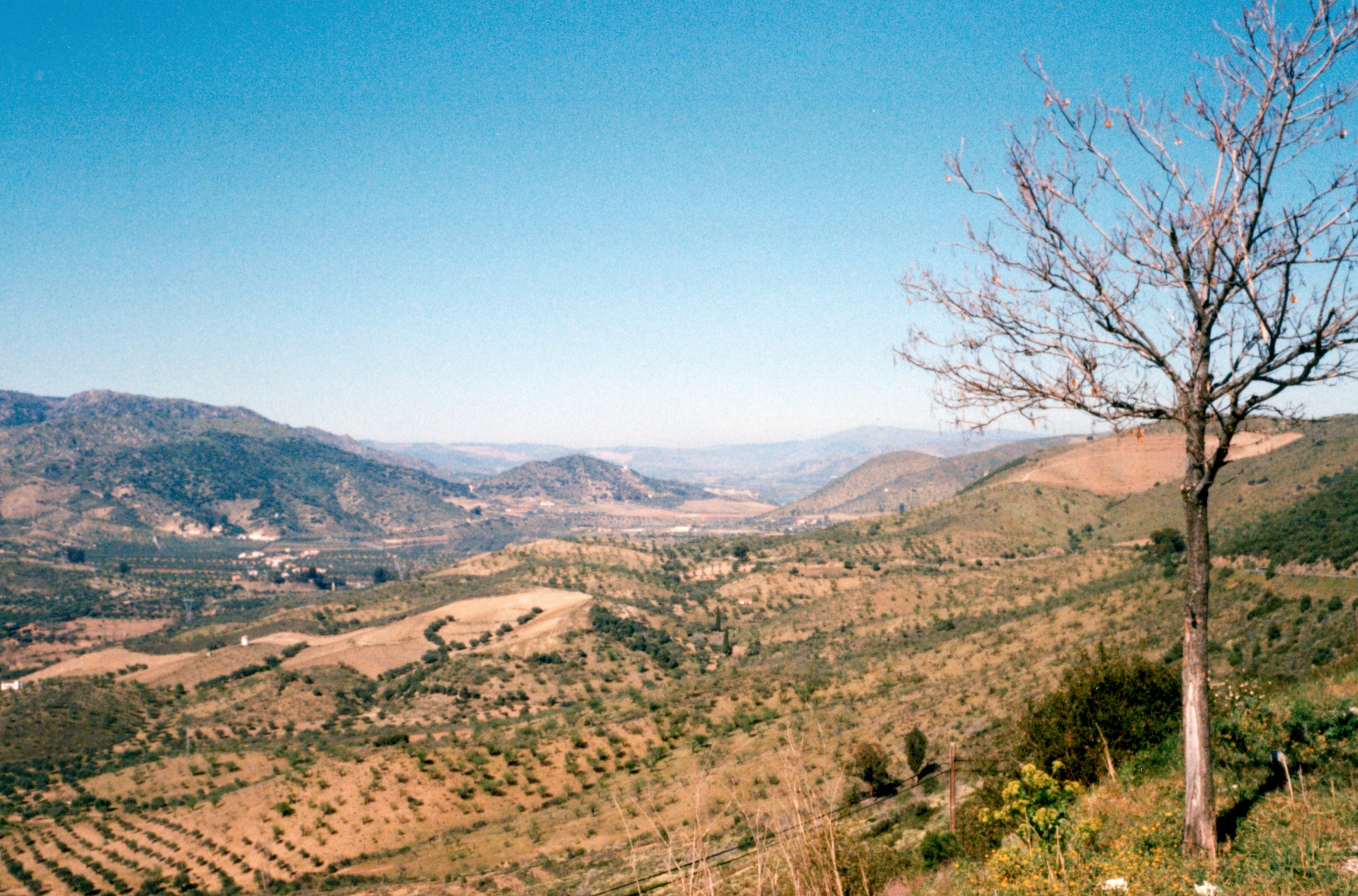
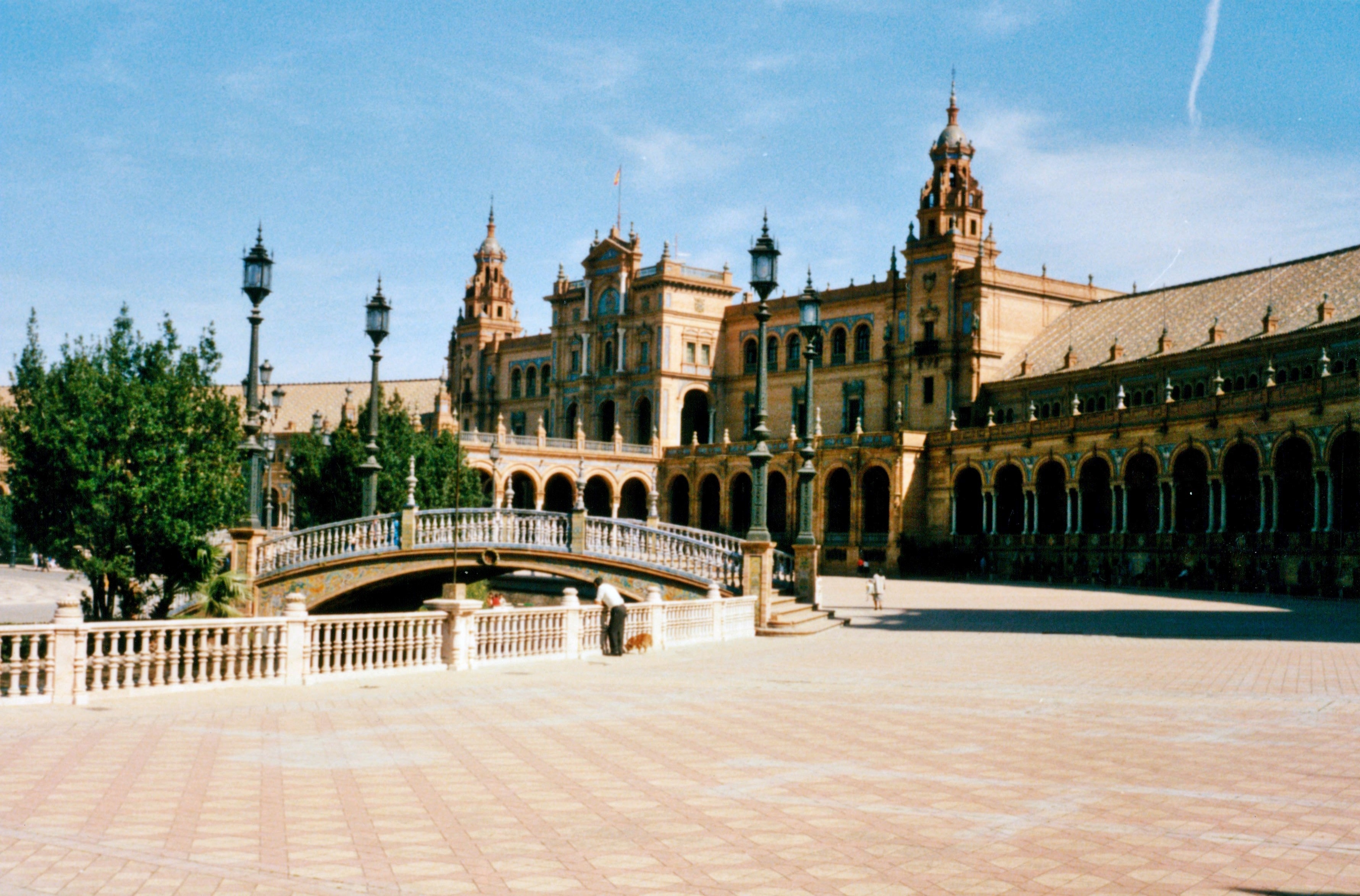
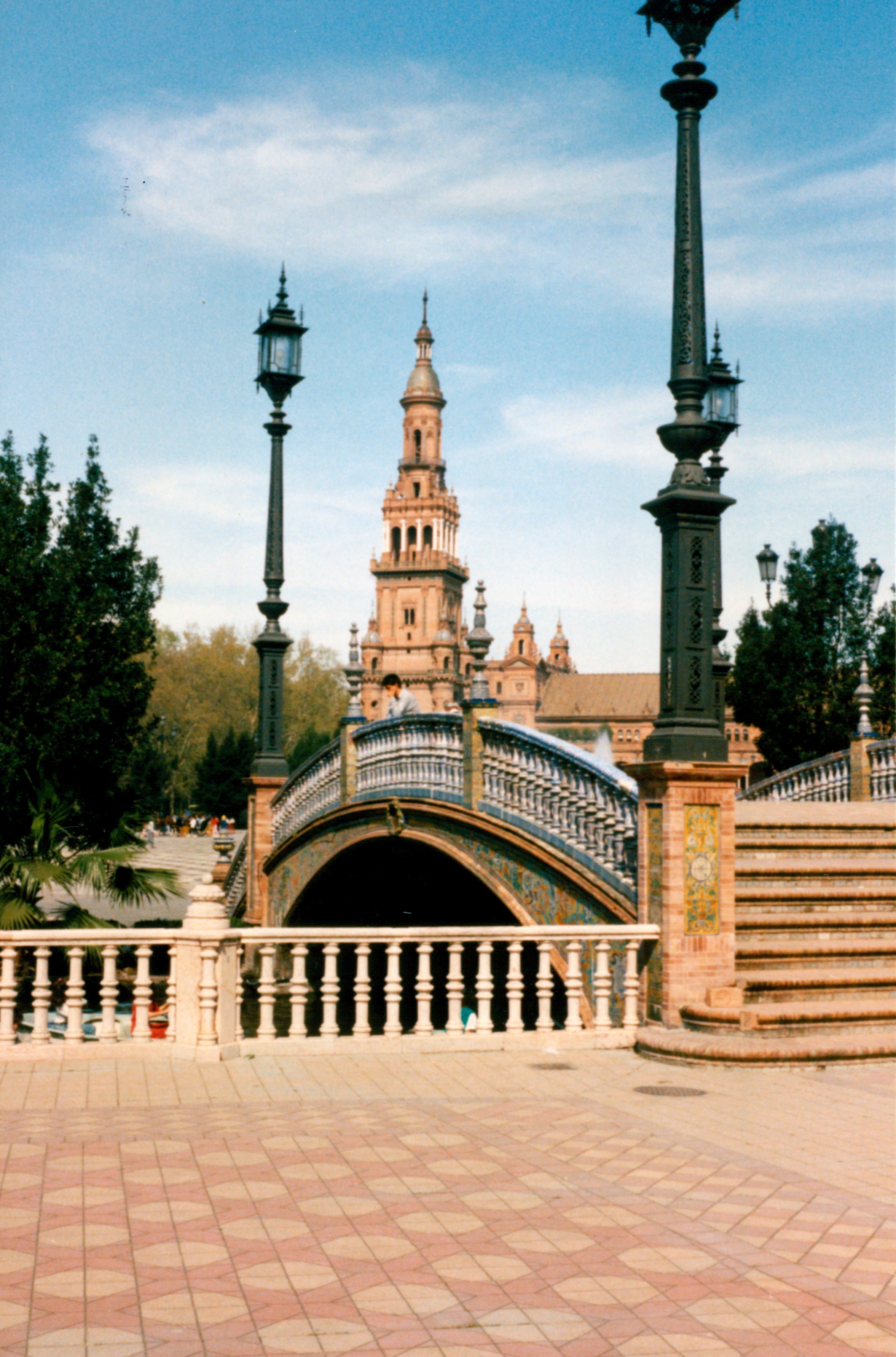
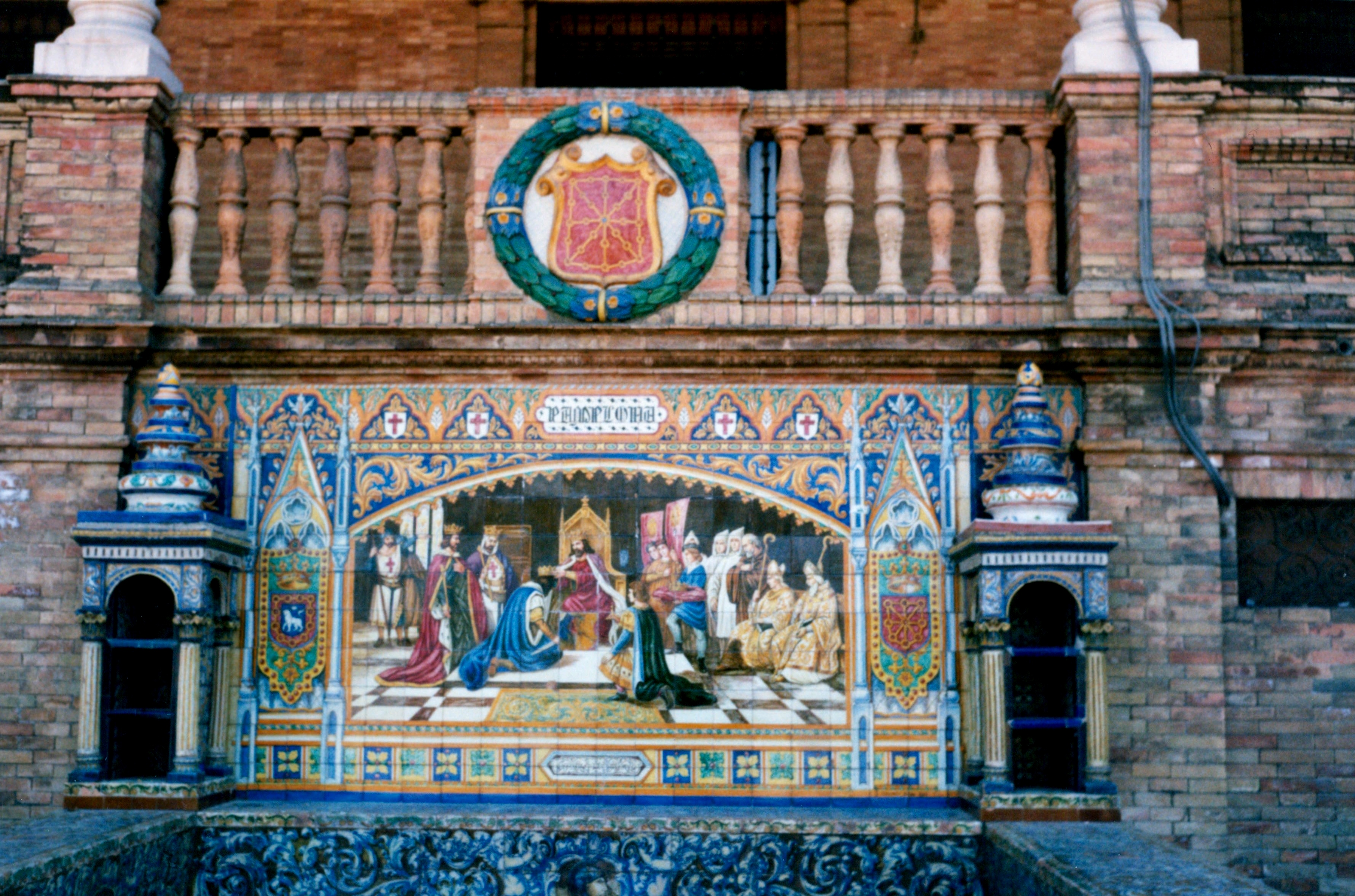
The next day is a Saturday and most of Spain appears headed along with us towards Seville. We stop for a meal in a village restaurant. As no one can understand what it is that we want to eat we are told to sit down and await a meal. This we do and are offered a fabulous salad, omelette, sausage and fruit for very few pesetas. By the end of the meal what had been an empty bar is crowded with travellers and locals all demanding lunch along with equally demanding children. A blistering afternoon turns into a lovely evening as we enter Seville and find ourselves a one-star hotel run by the unfortunate Carlos. We have our doubts about the place and its sources of income from the moment we arrive but it has an unbeatable price advantage. It is also right in the centre of town. We resolve to spend as little time in the room as possible. Carlos is detailed by mother to bring all our rubbish up as it is best not left on the bikes. We return from a late evening in the Bar des Artistes at 1am and Carlos is awakened to let us in. We leave at seven the next morning and Carlos is already washing the stairs and cleaning out the bathroom. It is a lovely day once again and reaches the mid-30s by early afternoon. We stroll around to the Palace building with its semi-circular design with murals depicting famous moments from the history of each of the provinces of Spain.
At the same time a large sound system is being up by a local radio station and playing Born in the U.S.A and some more traditional Spanish tunes to the large crowd. We wander around the town as the afternoon trickles by. Seville has a remarkable air of freedom and life and by early evening there are hundreds of people down by the river. The next morning, we pay the mother and resolve to give Carlos a good tip. He, however, has been sent elsewhere and we think that the odds of him receiving the money via his mother are very small.

South to Algeciras
Spain perseveres with its plain almost to the sea and there is only short drive through wooded hills from the plain and down to the coast.
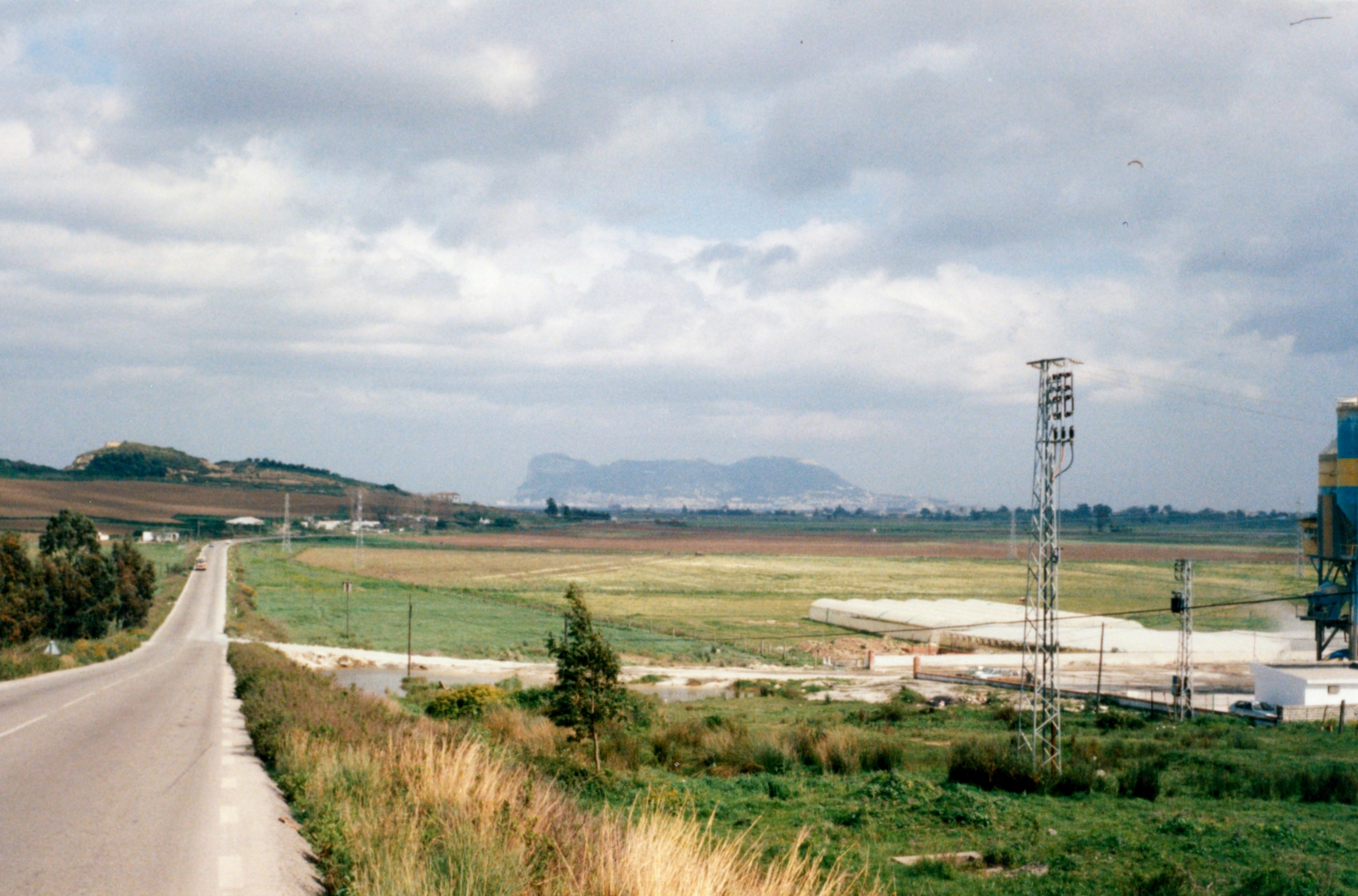
We decide to pop into Gibraltar and camp there for the night. We stay an hour. We find Eastbourne under martial law with the olde tea shoppes guarded by both the army and navy. There is no campsite. Back to Spain and on to Algeciras – the gateway to Africa.
The next day is spent working on the bikes our expression for trying to make the loads halfway manageable. An oil change later we ready to sail for Africa.
Although you land on the Spanish enclave of Ceuta first, Algeciras manages to bring a part of the Maghreb to Europe. Before you even buy the ferry tickets you have been offered large amounts of hashish and know the best places to stay in Tangier. The ferry journey is both short and efficient.
 Africa Overland 1988